
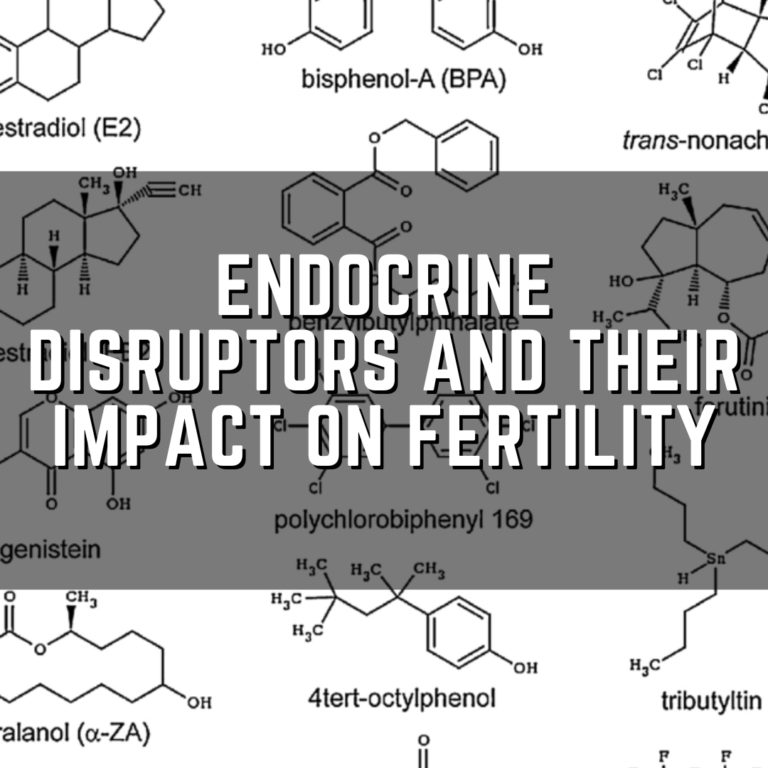
In this post, we’ll explore various endocrine disruptors present in the environment and consumer products, which can interfere with hormonal action and adversely affect reproductive health and fertility. We’ll focus on bisphenol A (BPA), phthalates, dioxins, pesticides, perfluoroalkyl and polyfluoroalkyl substances (PFAS), as well as parabens and phenols, and also discuss methods to minimize exposure to these chemicals.
🔗 Original studies are referenced in this post or within the linked Remembryo posts.
💡 Reminder: Terms underlined with a dotted black line are linked to glossary entries. Clicking these does not count toward your paywall limit.
How receptors work
Receptors are like tiny “locks” found on the surface of our cells, or sometimes inside cells. They play a crucial role in our body by receiving important messages or “keys” from various substances, like hormones or chemicals. When the right key fits into a receptor, it triggers specific actions or responses in the cell. These responses are vital for our body to function properly.
You can see this below. The receptor (purple) on the left is being activated by its corresponding hormone (red triangle), which causes a response.
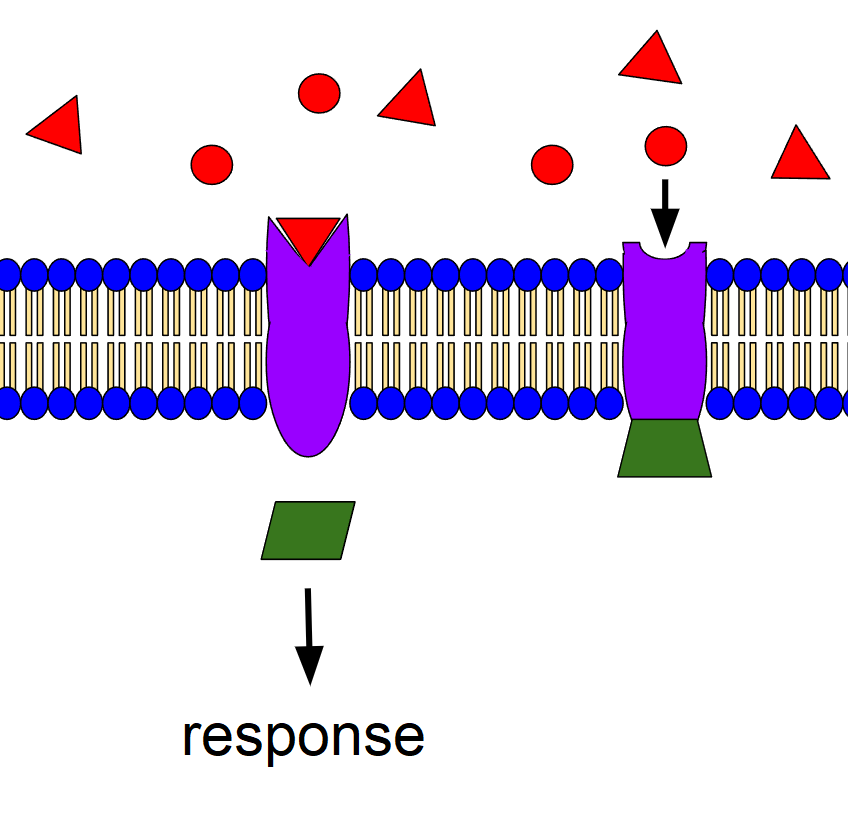
What’s important here is the shape of the hormone and receptor are complementary: they fit together perfectly.
When a hormone binds to its receptor, it triggers a chain reaction of events inside the cell. This signaling process leads to specific actions, like activation of certain genes. For example, estrogen receptors in mammary gland cells can become activated after binding to estradiol, which can lead to cell division to contribute to the growth of the mammary glands (Carroll 2016).
How endocrine disruptors can “trick” receptors
What’s important from above is that the shape of the hormone (key) fits perfectly with the shape of the receptor (lock). When the hormone binds to the receptor, it leads to a specific response in the cell. Endocrine disruptors can disrupt this process, because they are chemicals that have shapes that are very similar to hormones that can “trick” the receptor into becoming activated.
Below you can see the chemical structure of estradiol and Bisphenol A (BPA – a common endocrine disruptor).
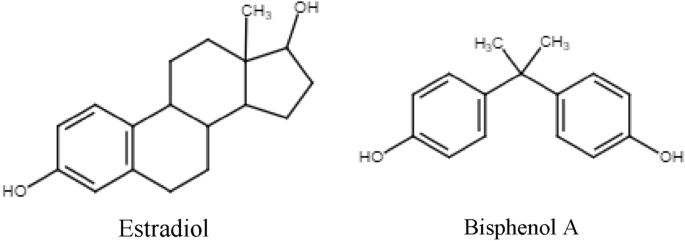
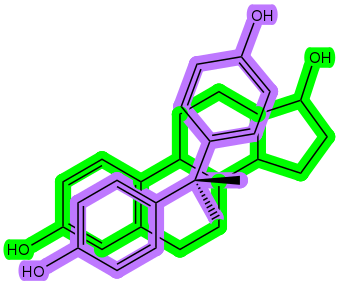
They may look different up above, but when you overlap the two molecules like below, you can appreciate how similar they are to one another. This is how BPA can bind to and activate the estrogen receptor, even in the absence of estradiol or any hormone.
Receptors involved in reproductive health and how they can be disrupted
Estrogen receptors are present in specific cells, particularly in those of the female reproductive system, including the ovaries, uterus, and breast tissue. Estradiol can bind to the estrogen receptor and regulate genes involved in female reproductive development and other processes.
The androgen receptor is also found inside cells, primarily in those of the male reproductive system like the testes, prostate, and seminal vesicles. Testosterone and other androgens can bind to the androgen receptor to regulate specific genes involved in male sexual development.
Although the estrogen receptor is primarily associated with the female reproductive system, it is also found in males. The same is true for the androgen receptor in females. These receptors and the hormones that bind them also regulate other processes besides reproduction.
Estrogen and androgen receptors are essential for regulating the hypothalamic-pituitary-gonadal axis (HPG axis), an important hormonal system that ensures proper reproductive processes and hormone balance in males and females. You can read more about the HPG axis by checking the glossary for the term. Endocrine disruptors can disrupt how these receptors function and lead to reproductive health issues and hormone-related disorders.

.svg)

There are other hormone receptors that can also be disrupted besides the estrogen and androgen receptor. We’ll talk about these as they come up!
Endocrine disruptors in infertility
Endocrine disruptors have a structure similar to sex hormones, making the reproductive system vulnerable to their effects. They can bind to endocrine receptors and disrupt hormonal signals, posing a threat to the normal functioning of the endocrine system.
Bisphenol A (BPA)

BPA, a chemical found in plastics, mimics estradiol in the body and is widely present in daily life, especially in plastic materials. BPA is used in making synthetic polymers like epoxy resins and polycarbonate, found in reusable bottles, kitchen utensils, varnishes, and coatings for canned food and beverages. The main dietary sources of BPA exposure are canned food, meat products, and fish. (Silva et al. (2023))
BPA disrupts the HPG axis, impacting reproductive health by altering GnRH levels, kisspeptin expression, and the release of FSH, LH and sex hormones, leading to impairment of the HPG axis. (Silva et al. (2023))
Phthalates

Phthalates, commonly found in PVC plastics, leach into the environment, contaminating food, water, air, and dust, and have been detected in various human tissues. Certain phthalates can be found in scented products, like perfumes, deodorants, soaps, shampoos, nail polish and cosmetics. DEHP is one of the most studied phthalates and is used as a plasticizer in PVC production. (Silva et al. (2023), Harley et al. (2016))
The exact disruptive mechanism of phthalates as endocrine disruptors is not fully understood, but they have been associated with HPG axis disorders and can have inhibitory or stimulating responses on androgen and estrogen receptor activity. (Silva et al. (2023))
Dioxins and dioxin-like compounds


Dioxins are dangerous environmental pollutants with toxic effects on animals, the environment, and human health. They mainly result from human activities like combustion processes and uncontrolled waste incinerators, and their accumulation in fatty foods can lead to human exposure and bioaccumulation in human tissues. (Silva et al. (2023))
Dioxins induce toxicities through their interaction with AhR, a receptor involved in regulating ovarian follicular growth and steroidogenesis, and one specific compound, TCDD, has been classified as a potent carcinogen. (Silva et al. (2023))
Organochlorine and organophosphate pesticides
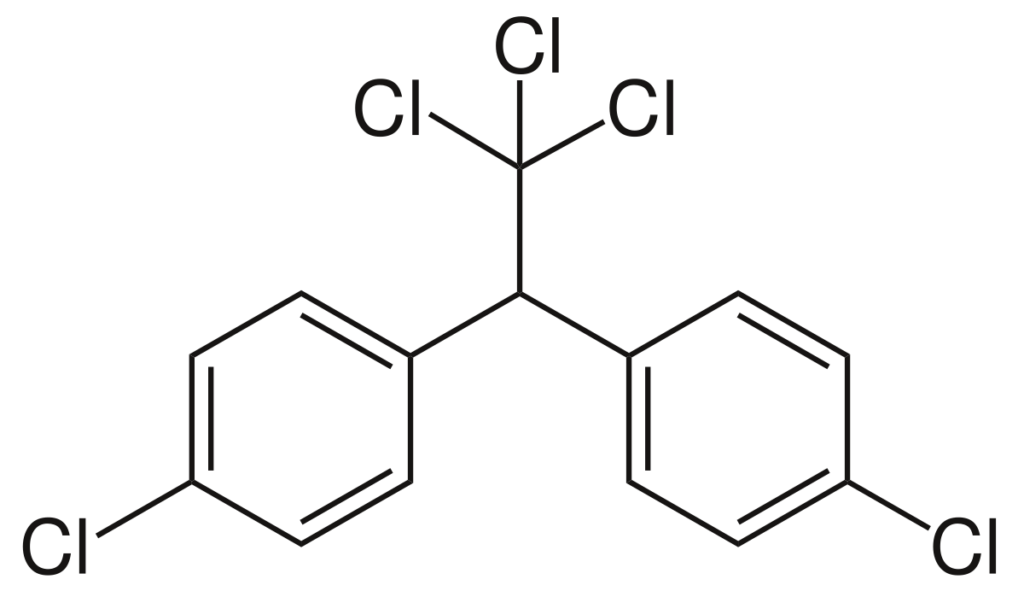
Pesticides are synthetic chemicals used to control pests, and their widespread use in agriculture and industry has raised concerns about their impact on human fertility. Pesticides can accumulate in the food chain, affecting animals that consume treated plants or contaminated water, and eventually impacting humans. DDT, introduced in 1940, is a well-known pesticide that was once used to control mosquito populations, but is now recognized for its harmful effects on wildlife and was banned in 1970. Despite this, it is still persistent in the environment. (Silva et al. (2023))
DDT has shown endocrine disruptive activity when binding with hormone receptors like the androgen receptor. (Silva et al. (2023))
Perfluoroalkyl and polyfluoroalkyl substances (PFAS)

Per- and polyfluoroalkyl substances (PFAS) have been used in various industries for decades, in products like nonstick cookware, food packaging, antistatic agents, anti-stain agents, water repellents, firefighting foams, and hygiene products. While some longer chain PFAS were phased out in the United States in 2001 due to toxicity concerns, PFAS is thought to be widely and consistently encountered in everyday life through various sources such as drinking water, diet, outdoor air, indoor dust, and soil. They are sometimes referred to as “forever chemicals.” (Foguth et al. (2020), Fromme et al. 2009)
Khalil et al. (2016) found that 95% of US citizens had PFASs in their blood serum.
PFASs can cause health issues by disrupting hormone balance, leading to liver toxicity, reproductive problems, and more, due to their interference with hormone systems in acting as endocrine disruptors (Mokra 2021).
Parabens

Parabens are commonly used as preservatives in cosmetics, food, pharmaceuticals, and other products for their antimicrobial properties. They share structural similarities with bisphenols, including various subclasses like methyl, propyl, and butyl parabens. (Silva et al. (2023))
Phenols

Phenols are often found in different personal care products and plastics, including benzophenone-3 (BP-3) and triclosan. BP-3 is a UV-filter that is commonly found in cosmetics, sunscreens, and some plastics, while triclosan is an antibacterial ingredient present in personal care products, toys, and kitchenware. (Aker et al. 2016)
Endocrine disruptors and female fertility
This section will compile some of the evidence that endocrine disruptors affect female fertility.
BPA
Several human studies have shown higher BPA concentrations in adolescent girls and women with PCOS, suggesting a potential link between BPA exposure and the development of PCOS (Palioura et al. 2015, Akin et al. (2015))
Miao et al. (2015) revealed that high BPA levels, in females working at an epoxy resin factory, were associated with increased estradiol, prolactin and progesterone levels compared to unexposed females. This suggests that BPA exposure can lead to female hormone imbalances.
Multiple studies indicate that early exposure to BPA in female rats and mice affects the HPG axis, leading to changes in hormone levels and ovarian development (reviewed by Silva et al. (2023)).
La Rocca et al. (2014) found that 41.8% of infertile women had detectable levels of serum BPA compared to 23.3% of fertile women in rural areas of Italy, while 71.4% of infertile women in metropolitan areas of Italy had detectable BPA levels compared to 23.1% of fertile women. This suggests that metropolitan areas may be at higher risk of BPA exposure.
When faced with objections to the use of BPA, the industry turned to alternative compounds like Bisphenol S (BPS), Bisphenol F (BPF), and Bisphenol E (BPE), which are analogs of BPA used in polycarbonates and epoxy resins production.
Few studies have explored the endocrine activity and health effects of BPA analogs, but they raise similar concerns to BPA. Shi et al. (2019) found that mice exposed to BPA, BPE, or BPS showed early puberty, irregular menstrual cycles, reduced pregnancy rates, and birth-related deaths.
Phthalates
Hauser et al. (2016) analyzed urine samples from 256 women and found that those with higher DEHP metabolites had reduced oocyte production, clinical pregnancy, and live birth rates.
Trnka et al. (2021) measured DEHP metabolite levels in urine samples and found links to reduced fertility at certain concentrations.
Mouse studies have investigated the effects of phthalates on the mouse reproductive system. The phthalate DBP showed ovarian toxicity and altered hormone levels, while DEHP exposure affected various aspects of mouse oocytes, indicating disruption of maturation and fertilization processes. (Silva et al. (2023))
Organochlorine and organophosphate pesticides
Chen et al. (2018) investigated levels of organochlorine pesticides in breast milk of women in Taiwan. Levels of DDT and Hexachlorocyclohexane were highest. They found associations with some organochlorine pesticides and infertility, which was also linked to dietary habits, including drinking cow milk and eating beef.
Chiu et al. (2018) found lower clinical pregnancy and live birth rates in women who had higher intake of fruits and vegetables with high pesticide residue status. Women who consumed fruits and vegetables with low pesticide residues showed no differences with clinical pregnancy and live birth rates. They checked residue levels using reports from the USDA.
Yang et al. (2015) found higher levels of DDE and polychlorinated biphenyls in women with PCOS.
Björvang et al. (2021) found reduced ovarian reserve and fertility in women with higher levels of some organochlorine pesticides and other pollutants.
Dioxins and dioxin-like compounds
Several studies have explored the connection between serum levels of dioxin-like substances and endometriosis, and found a positive correlation. (Silva et al. (2023))
The Seveso disaster was an industrial accident in 1976 that caused the highest known exposure to the dioxin TCDD in residential populations near Milan, Italy. The Seveso Women’s Health Study found that TCDD exposure was linked to decreased fertility in women, with longer time to pregnancy and possible transgenerational effects in their daughters (Eskenazi et al. 2020).
Studies have shown that pregnant rats exposed to TCDD showed negative effects on ovary development and function, while transgenerational exposure revealed impairment in the adult ovary and function. (Silva et al. (2023))
Perfluoroalkyl and polyfluoroalkyl substances (PFAS)
Xie et al. (2021) found that PFAS exposure was linked to changes in estradiol and testosterone levels in men and women.
Cohen et al. (2023) showed that higher exposure to specific PFASs was associated with reduced clinical pregnancy.
Tan et al. (2022) found a non-linear association with serum PFAS levels and self-reported infertility, “suggesting that the effect of PFAS on fertility might depend on exposure levels and/or different subtypes.”
Wang et al. (2023) conducted a meta-analysis and pooled the results of 13 studies, and found that specific PFASs, including PFOA and PFOS, were associated with reduced fertility.
Endocrine disruptors and male fertility
This section will compile some of the evidence that endocrine disruptors affect male fertility.
Vitku et al. (2016) found that 93% of men attending an assisted reproductive clinic had BPA in their semen, which was related to lower sperm count and motility. Hu et al. (2017) found no association with BPA and sperm count, motility or semen volume.
Animal studies have shown associations between various insecticides, herbicides, and fungicides with adverse effects on semen quality, including decreased sperm quantity, motility, and vitality, as well as alterations in testosterone (Sharma et al. 2020). Figueroa et al. (2015) found that increased levels of pesticides were associated with sperm aneuploidy.
Studies on the phthalate DEHP in mice have shown it can cause a significant reduction in sperm production, epididymal sperm count, and sperm viability, along with decreased testosterone levels. Studies in humans have shown that phthalates are associated with abnormal sperm quality, reduced testosterone and increased estradiol production, although some studies are contradictory (Sharma et al. 2020).
The dioxin TCDD binds to the aryl hydrocarbon receptor in animal studies, causing reduced sperm count in male rat offspring, along with changes in sperm parameters, testicular function, and hormone levels (Sharma et al. 2020). Van Luong et al. (2018) found that men residing near dioxin-contaminated areas had lower testosterone levels.
The phenol triclosan was found in 96.7% of men at a reproductive health clinic, which was associated with lower sperm progressive motility, morphology, sperm concentration and sperm count (Zhu et al. 2016).
Jurewicz et al. (2017) found urine paraben levels were associated with abnormal sperm morphology and decreased motility.
Xie et al. (2021) found that PFAS exposure was linked to changes in estradiol and testosterone levels in men and women.
What can be done to reduce exposure to endocrine disruptors?
Various studies have looked at ways to reduce exposure to endocrine disruptors. Corbett et al. (2022) performed a review and identified a number of studies that found reductions in exposure levels following lifestyle modifications:
- Consume organic food.
- Avoid plastic-contained foods and beverages; choose cardboard, glass or stainless-steel containers instead.
- Minimize consumption of canned food and beverages.
- Avoid fast food and processed foods in the diet.
- Alter personal care products to avoid phthalates, parabens and phenols like triclosan and BP-3/oxybenzone, and any other endocrine disruptors. Avoid products that contain fragrances or perfumes, unless indicated as phthalate free. Use the Skin Deep database to search products and identify potentially harmful ingredients in personal care products.
- Depending on the materials used to build a home, the dust in that home may contain phthalates, so regular cleaning is recommended.
- Choose foods that are not wrapped in plastic packaging and wash them thoroughly before consumption to minimize contamination.
If you want to check out the summary for this one, including all the details for each of the reviewed studies, you can check my post Study evaluates interventions that lower endocrine disruptor levels.
Importantly, as discussed by Corbett et al. (2022), studies investigating the ways to reduce exposure to endocrine disruptors only demonstrate reductions in these chemicals, without establishing a direct link to improved clinical outcomes. So while the above methods have been shown to reduce exposure, we don’t know if this is tied to improved fertility. More research is needed!
Mukherjee et al. (2021) discusses some additional considerations for endocrine disruptor exposure:
- Avoid working with pesticides, herbicides, fungicides and industrial chemicals.
- Fruits and vegetables can be contaminated with endocrine disruptors, depending on the area they’re grown. The USDA releases annual reports that list pesticide levels in produce.
- Some countries have loose regulations on the use of pesticides, putting some food products at risk of contamination (meat, eggs, fruit, vegetables, tea, coffee, etc.).
- Avoid reheating food in plastic and getting take out from restaurants that use plastics, as the heat can leach phthalates or BPA.
Other things to consider:
- Even is a product is BPA free, it may contain another Bisphenol (BPS, BPE, BPF), which may also act as endocrine disruptors.
- BPA is also found in thermal paper, which is commonly used in receipts
- Non-stick cookware may contain PFASs (Teflon is a notorious PFAS), so it may be best to use glass, ceramic, stainless steel or cast iron.
Conclusions
Endocrine disruptors found in the environment and consumer products can interfere with hormones, leading to adverse reproductive health effects.
Common endocrine disruptors include bisphenol A (BPA), phthalates, dioxins, pesticides, perfluoroalkyl and polyfluoroalkyl substances (PFAS), parabens and phenols, which have all been associated with infertility in humans and animal models.
BPA represents one of the best studied endocrine disruptors, and has been linked to PCOS, altered hormone levels, reduced sperm count and motility, and infertility. One study found that BPA levels were higher in women who lived in metropolitan areas, which was linked to higher rates of infertility.
Studies have shown that you can reduce endocrine disruptor exposure through lifestyle modification, such as in choosing organic food, avoiding plastics and canned food, using safer personal care products,regularly cleaning to reduce dust, and being cautious of pesticides in fruits, vegetables and meats.
Unfortunately, most research simply shows that these lifestyle modifications reduce endocrine disruptor levels without linking it to improved reproductive outcomes, so more research is needed to show if these modifications have a meaningful benefit.

About Embryoman
Embryoman (Sean Lauber) is a former embryologist and the founder of Remembryo, an IVF research and fertility education website. After working in an IVF lab in the US, he returned to Canada and now focuses on making fertility research more accessible. He holds a Master’s in Immunology and launched Remembryo in 2018 to help patients and professionals make sense of IVF research. Sean shares weekly study updates on Facebook, Instagram, and Reddit regularly. He also answers questions on Reddit or in his private Facebook group.