

Researchers in a 2019 study performed a randomized controlled trial and found no benefit with the endometrial scratch, even in women with recurrent implantation failure.
Despite all the advances in IVF over the years, it seems like live birth rates are capped at about 50% per transfer.
Craciunas et al. (2019) have estimated that embryos account for one-third of implantation failures, while issues relating to implantation account for two-thirds.
So ensuring the uterine lining is ready for embryo implantation is of critical importance!
🔗 Original studies are referenced in this post or within the linked Remembryo posts.
💡 Reminder: Terms underlined with a dotted black line are linked to glossary entries. Clicking these does not count toward your paywall limit.
Lensen et al. in their 2019 randomized controlled trial looked at one IVF add-on that is thought to benefit embryo implantation: the endometrial scratch.
The procedure is relatively simple and takes place the month before the IVF cycle starts.
Basically, a long, thin tube called a “pipelle” is inserted into the uterus and rotated to “scratch” the uterine tissue. It’s not clear why this helps, but one theory is that the associated inflammatory response to the tissue damage might somehow aid in embryo implantation.
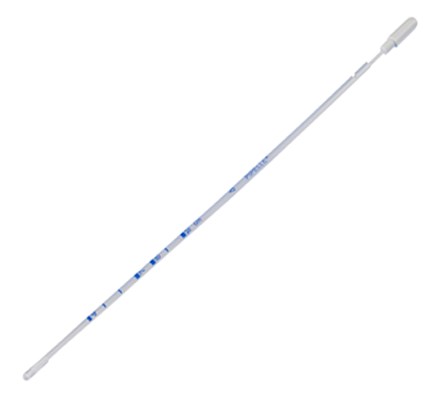
In their study, the researchers randomly assigned 1364 women across 13 clinics in 5 countries: 690 women received the endometrial scratch and 674 did not.
- 180 of 690 women in the scratch group had a live birth (26.1%), and 36 had a miscarriage (5.2%)
- 176 of 674 women in the no-scratch group had a live birth (26.1%), and 30 had a miscarriage (4.5%)
So they found no difference in live birth rate or miscarriage rates between the two groups. This was in their intention-to-treat analysis; in their per-protocol analysis, they also found no difference.
But maybe these women never had implantation issues. They performed a subgroup analysis on women with recurrent implantation failure, who had a history of implantation failure (at least twice), and also found no difference between the groups.
In terms of discomfort, they also reported on pain. On a 10 point scale, the average pain level was 3.5 and 14 women had adverse reactions (excessive pain, dizzy/nausea, bleeding).
There were also no differences in ectopic pregnancies, multiples, or stillbirths.
Reference

About Embryoman
Embryoman (Sean Lauber) is a former embryologist and the founder of Remembryo, an IVF research and fertility education website. After working in an IVF lab in the US, he returned to Canada and now focuses on making fertility research more accessible. He holds a Master’s in Immunology and launched Remembryo in 2018 to help patients and professionals make sense of IVF research. Sean shares weekly study updates on Facebook, Instagram, and Reddit regularly. He also answers questions on Reddit or in his private Facebook group.
Related posts:
 Complete guide to embryo implantation and implantation failure
 Meta-analysis examines the use of embryo glue on IVF outcomes
 Meta-analysis shows benefit of embryo glue when using own eggs, not donor
 Meta-analysis of commonly used IVF immunotherapies shows no benefit
 Meta-analysis finds no difference in pregnancy outcomes when using the ERA
 RCT finds no change in birth rates for standard or ERA-timed euploid transfer
 Evidence-based recommendations from ESHRE for 27 IVF add-ons
 Meta-analysis combines results of 12 intrauterine, intraovarian PRP studies