
A 2026 study showed that women with unexplained infertility who didn’t get pregnant after IVF had a more diverse endometrial microbiome with fewer Lactobacillus bacteria, and metabolites produced by some bacteria may influence how the uterine lining functions during implantation.
Besides the embryo itself, the uterine environment can also play an important role in implantation. One area that’s getting a lot of attention is the endometrial microbiome, which includes the bacteria living inside the uterus.
Some studies have suggested that a uterus dominated by Lactobacillus bacteria can be linked to better IVF outcomes, but results across studies have been inconsistent, and the biological mechanisms that explain why this happens isn’t clear.
In a study by Giangrazi et al. (2026), researchers examined whether the types of bacteria present in the endometrium of unexplained infertility patients were linked to IVF outcomes, and if factors produced by these bacteria could influence how the uterine lining functions.
For more background, check out my post The impact of the vaginal and endometrial microbiome on reproductive health and IVF outcomes.
🔗 Original studies are referenced in this post or within the linked Remembryo posts.
💡 Reminder: Terms underlined with a dotted black line are linked to glossary entries. Clicking these does not count toward your paywall limit.
Women who didn’t get pregnant had a more diverse endometrial microbiome
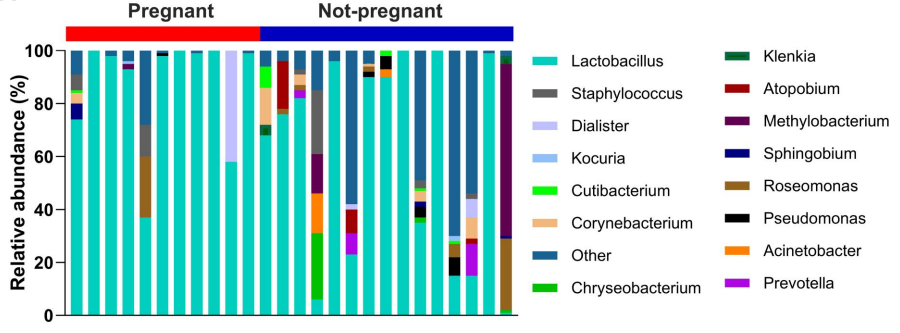
The study included 29 women with unexplained infertility who were undergoing IVF. Before treatment, the researchers collected endometrial biopsies and analyzed bacterial DNA to identify which bacteria were present. Later, all patients had a single embryo transfer of a good or top quality blastocyst, and the researchers compared microbiomes between women who became pregnant and those who didn’t.
Women who didn’t become pregnant tended to have more diverse bacterial communities in the endometrium. Their samples showed lower levels of Lactobacillus species and higher levels of bacteria like Prevotella and Corynebacterium. In contrast, women that became pregnant generally had less diverse microbiomes that were more dominated by Lactobacillus.
Gene activity and bacterial metabolites may help explain the differences
To investigate if these bacterial differences might affect implantation, the researchers performed additional experiments using endometrial cells grown in the lab.
They focused on substances produced by bacteria called metabolites. In particular, they tested lactate, which is commonly produced by Lactobacillus species, and butyrate, which is produced by other types of bacteria that are more common when the microbiome is more diverse.
Then they looked at three processes that are important for implantation:
- Receptivity and decidualization gene expression: Exposure to butyrate increased expression of genes involved in preparing the endometrium for implantation, while lactate didn’t. The authors suggest this could disrupt the normal balance of implantation signals.
- Epithelial barrier integrity: Butyrate weakened the barrier function of endometrial epithelial cells, which could make the uterine lining more vulnerable to stress or disruption.
- Pro-inflammatory signaling: Butyrate increased inflammatory and antimicrobial responses in the cells, which could potentially interfere with the implantation process.
These results suggest that metabolites produced by different types of bacteria can influence how the endometrium behaves, although these findings were observed in laboratory cell models rather than directly in patients.
Conclusion
Overall, this study suggests that women with unexplained infertility who didn’t get pregnancy after embryo transfer had a more diverse endometrial microbiome with fewer Lactobacillus species.
Some bacteria linked to higher diversity can produce butyrate, which could influence how endometrial cells behave and disrupt the uterine environment needed for implantation.
However, the study was small and didn’t show that these microbial differences directly caused implantation failure. The proposed mechanism involving butyrate was also tested only in laboratory cell models and not directly in patients.
For now, these results help us understand how the endometrial microbiome might influence IVF outcomes and could eventually help explain differences seen in patients with unexplained infertility, but more research is needed.
Want to read more about the microbiome and IVF success?
This post reviews what research currently shows about the vaginal and endometrial microbiome and how it may relate to fertility and IVF outcomes. While Lactobacillus species are often considered beneficial and are commonly found in the reproductive tract, studies examining whether microbiome differences actually affect IVF success have produced mixed results. Read more.

Researchers in a 2023 study found that probiotic supplementation had no impact on positive hCG pregnancy rates, but may improve miscarriage rates. Read more.
A 2025 study found that RIF and RPL patients with abnormal EMMA & ALICE results that had antibiotic and/or probiotic treatment showed similar pregnancy rates to those with normal EMMA & ALICE results. Read more.
Reference

About Embryoman
Embryoman (Sean Lauber) is a former embryologist and the founder of Remembryo, an IVF research and fertility education website. After working in an IVF lab in the US, he returned to Canada and now focuses on making fertility research more accessible. He holds a Master’s in Immunology and launched Remembryo in 2018 to help patients and professionals make sense of IVF research. Sean shares weekly study updates on Facebook, Instagram, and Reddit regularly. He also answers questions on Reddit or in his private Facebook group.