
Researchers in a 2026 study found that about 0.4% of blastocysts derived from apparently normal 2PN fertilization were triploid, and although these embryos were more likely to have abnormal polar body extrusion, genetic testing is still the only reliable way to identify them.
When an egg is fertilized, embryologists typically look for two pronuclei (2PN), which contain the DNA from the egg and sperm before they combine. The presence of 2PN is generally considered a sign of normal fertilization because it suggests that the embryo received one set of chromosomes from the egg and one set from the sperm.


Normally, this results in an embryo with 46 chromosomes in total (23 from each parent). This is known as diploidy and is the normal chromosome complement in humans.
However, some embryos that appear normally fertilized as 2PN are later found to be triploid, meaning they have three sets of chromosomes instead of the usual two.
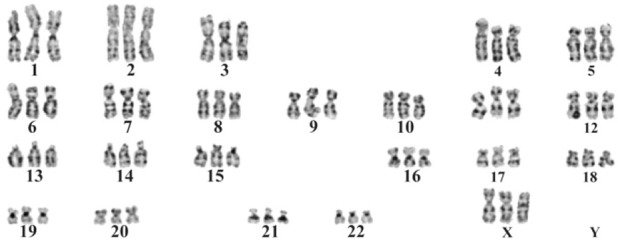
Triploidy is one of the most common chromosomal abnormalities seen in miscarriages and rarely results in a live birth. Having three copies of each chromosome, instead of two, disrupts normal gene activity throughout development, leading to severe abnormalities.
Nohales et al. (2026) investigated how often triploidy occurs in embryos derived from apparently normal 2PN fertilization and whether these embryos have any distinguishing features during development that could help identify them before transfer.
🔗 Original studies are referenced in this post or within the linked Remembryo posts.
💡 Reminder: Terms underlined with a dotted black line are linked to glossary entries. Clicking these does not count toward your paywall limit.
Study details
- Study type: Retrospective study conducted between 2019 and 2023 at a single IVF center in Spain.
- Participants: 3369 PGT-A cycles from 2666 patients aged 18–45 years, representing 12,395 blastocysts derived from normally fertilized (2PN) zygotes.
- Fertilization assessment: Researchers reviewed fertilization checks performed 16–18 hours after ICSI, including the number of pronuclei and polar bodies.
- Genetic testing: All embryos underwent PGT-A using NGS and SNP analysis (PGTseq from Juno Genetics). This allowed researchers to identify triploid embryos and sibling embryos with the normal chromosome complement (diploid embryos, referred to as “euploid” below).
Triploid embryos were rare, but showed distinct developmental features
Of the 12,395 blastocysts from apparently normal 2PN fertilization, researchers found that 50 blastocysts were triploid, corresponding to a frequency of 0.4%.
These 50 blastocysts came from 50 patients. The researchers compared them with euploid sibling embryos from the same IVF cycles to identify differences in developmental features.
- Failure of second polar body extrusion. Besides seeing 2PN, another sign of normal fertilization is the extrusion of a second polar body. This polar body contains chromosomes that are normally removed from the egg. If it fails to separate, the egg may retain an extra set of chromosomes, increasing the risk of triploidy. Among triploid embryos derived from 2PN fertilization, only 32% had two polar bodies (compared with 100% of euploid embryos, p<0.001). When researchers only looked at embryos that had both 2PN and confirmed extrusion of the second polar body, the triploidy rate dropped from 0.4% to 0.13%.
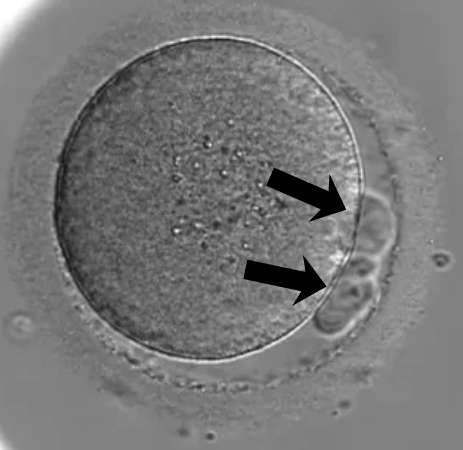
- Unequal pronuclear sizes. The two pronuclei are usually similar in size. However, triploid embryos with only one polar body were more likely to have one pronucleus that was significantly larger than the other. The researchers speculate that the larger pronucleus may contain extra maternal chromosomes that should have been expelled into the second polar body.
- Slower embryo development. Triploid embryos showed slower early cleavage timings by time-lapse, but this didn’t translate into a significant difference in whether blastocysts were ready for biopsy on day 5 or day 6.
- Poorer trophectoderm quality. About 44% of triploid embryos had good-quality trophectoderm compared with 67% of euploid embryos (p= 0.03).
Although these features were more common in triploid embryos, none were accurate enough to reliably identify triploidy on their own.
Conclusion
This study shows about 1 in 250 blastocysts that appeared normally fertilized was triploid.
The strongest link to triploidy was failure of the second polar body to separate from the egg, suggesting that many triploid embryos may occur when an extra set of maternal chromosomes remains inside the egg. This can still result in a 2PN embryo because the extra maternal chromosomes may remain within the maternal pronucleus, making fertilization appear normal even though the embryo is triploid.
Triploid embryos were also more likely to have unequal pronuclear sizes, poorer trophectoderm quality, and slower early development, but these couldn’t reliably identify triploid embryos on their own. Genetic testing is the only dependable way to detect triploidy.
These results highlight that most 2PN embryos are diploid, but a small number can still have chromosome abnormalities such as triploidy. Likewise, some embryos that appear abnormally fertilized, such as 1PN or 3PN embryos, can occasionally have a normal chromosome complement. Overall, fertilization appearance doesn’t always reflect an embryo’s true chromosome status.
Limitations include the small number of triploid embryos identified, the single-center design, and the possibility that some triploid embryos were missed due to limitations of genetic testing.
Want to read more about abnormal fertilization?
This post covers what occurs during normal fertilization and what it means to have an abnormally fertilized zygote (0PN, 1PN, 3PN, 4PN). Using PGT to test these embryos reveals that many have the correct number of chromosome sets and can lead to successful live births. Read more.
A 2025 case report shows that some ICSI-derived 3PN embryos can be rescued by removing the extra female pronucleus, resulting in a healthy live birth, but the technique remains experimental. Read more.
A 2025 meta-analysis found that while 1PN zygotes don’t convert to blastocyst as well and have lower success rates when untested, those confirmed as euploid can lead to healthy births, but extra care is needed to confirm they are truly normal. Read more.
Reference
Nohales M, Escribá MJ, Martín Á, Coello A, Insua F, Santos MJ. (2026). PGT-A reveals triploid embryos among normally fertilized oocytes: frequency and blastocyst features. Journal of Assisted Reproduction and Genetics. https://doi.org/10.1007/s10815-026-03900-7

About Embryoman
Embryoman (Sean Lauber) is a former embryologist and the founder of Remembryo, an IVF research and fertility education website. After working in an IVF lab in the US, he returned to Canada and now focuses on making fertility research more accessible. He holds a Master’s in Immunology and launched Remembryo in 2018 to help patients and professionals make sense of IVF research. Sean shares weekly study updates on Facebook, Instagram, and Reddit regularly. He also answers questions on Reddit or in his private Facebook group.