
A pilot study in 2025 explored whether mitochondrial DNA mutations in follicular fluid could reflect egg quality, finding some early signs of a possible link, but there were some significant limitations.
There’s no simple way to measure egg quality, so researchers are exploring new biomarkers that might help.
Mitochondria play an important role in egg quality by generating the energy needed for the egg to mature, fertilize, and support early embryo development. As women age, mitochondrial function declines, and this may be linked to poorer egg quality and fertility outcomes. Because mitochondria have their own DNA (mtDNA), damage to this DNA could be a sign of poor egg health.
In a new pilot study, Ventayol-Guirado et al. (2025) explored whether mitochondrial DNA (mtDNA) found in follicular fluid — the liquid surrounding the egg that’s usually discarded after retrieval — could serve as a marker of egg quality. Since this mtDNA likely comes from the egg or nearby support cells, any damage might signal a problem in the follicular environment.
They suspected that ovarian stimulation might trigger stress and cause mtDNA damage, based on earlier studies linking it to oxidative damage in the follicle.
🔗 Original studies are referenced in this post or within the linked Remembryo posts.
💡 Reminder: Terms underlined with a dotted black line are linked to glossary entries. Clicking these does not count toward your paywall limit.
Increase in mtDNA mutations after ovarian stimulation
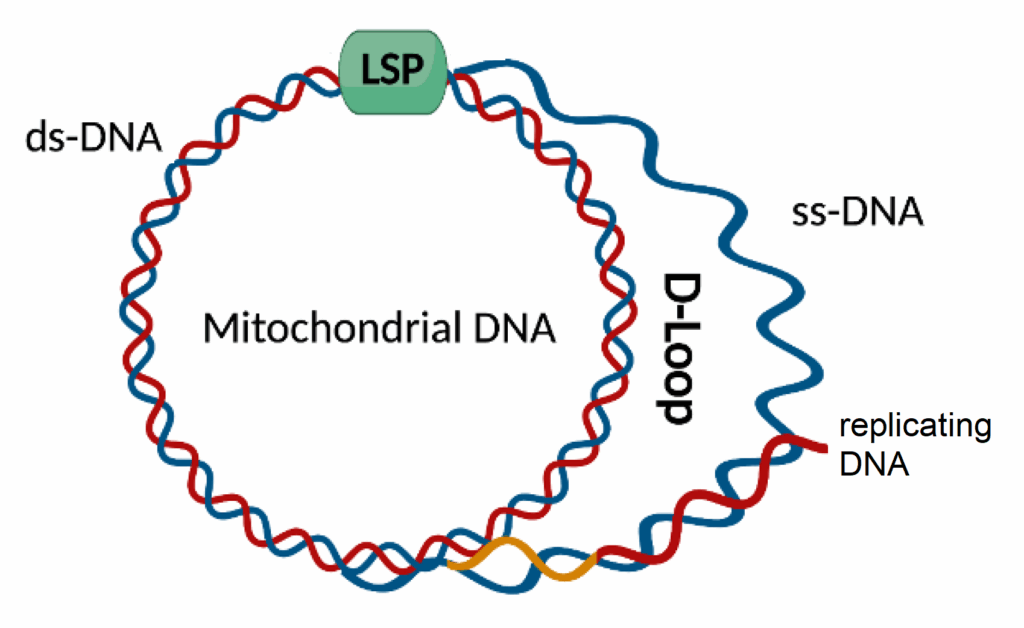
They found that 95% of women who had ovarian stimulation had at least one mtDNA mutation in their follicular fluid that wasn’t present in their blood, which was collected before ovarian stimulation and acted as their control. These mutations were primarily located in the D-loop, a region of the mitochondrial genome that is particularly vulnerable to oxidative stress because it contains single-stranded DNA instead of double-stranded DNA (shown below). Mutations in the D-loop were over three times more common than in other regions of mtDNA (p= 0.0008).
The researchers also looked at whether the number of mtDNA mutations correlated with outcomes like oocyte count, embryo quality, and pregnancy. While women with more mutations had fewer oocytes, poorer-quality embryos, and no pregnancies in the longest stimulation group, none of these findings were statistically significant. The authors describe them as “trends,” but that’s essentially another way of saying the results came close but didn’t meet the threshold for significance. The only statistically significant finding was that women with at least one grade A embryo had fewer mtDNA mutations (p= 0.026).
Is mtDNA a window into the follicular environment?
The researchers propose that these mtDNA mutations might arise during ovarian stimulation, due to increased oxidative stress in the follicular environment. That stress could damage mitochondria in the egg itself or in supporting cells like granulosa cells, leading to the release of fragmented mtDNA into the fluid. This suggests that mtDNA damage measured by follicular fluid may be a good marker for egg quality.
But there are key limitations!
Most importantly, the study included only 21 women and lacked pre-stimulation follicular fluid for comparison (blood mtDNA was used due to ethical reasons). This makes it unclear whether the mtDNA mutations were caused by ovarian stimulation or were already present. The authors argue that the high number of mutations suggests stimulation-related damage, but a pre- or minimal-stimulation control would be needed to show this more clearly.
Additionally, the researchers didn’t use established methods to confirm that ovarian stimulation increased oxidative stress. They measured mtDNA damage as an indirect marker, but didn’t assess oxidative stress directly through standard redox biomarkers, like total antioxidant activity or enzymes like superoxide dismutase, which have been used in other studies to show that stimulation alters the follicular environment.
The patients in this study were also young (27-35), and any disruption to mitochondria might be more pronounced in older patients. Older patients may be more susceptible to mtDNA damage, as they tend to have fewer mitochondria, increased ROS, and processes that protect mtDNA or remove damaged mitochondria might be impaired. You can read more about this in my post Mitochondria and egg quality.
With these limitations, it’s hard to draw firm conclusions. The findings are interesting, but not especially convincing, at least not yet. Still, this study opens a small window into the egg’s surrounding environment and how it might be altered by stimulation. More research is needed!
If future studies confirm these findings, strategies like antioxidant supplementation of culture media could potentially help protect eggs from ROS-related damage.
Related studies
These additional studies were referenced by the authors of the paper and haven’t been covered on Remembryo. They may be helpful if you’re exploring this topic further. This section is available for paid subscribers.

Reference

About Embryoman
Embryoman (Sean Lauber) is a former embryologist and the founder of Remembryo, an IVF research and fertility education website. After working in an IVF lab in the US, he returned to Canada and now focuses on making fertility research more accessible. He holds a Master’s in Immunology and launched Remembryo in 2018 to help patients and professionals make sense of IVF research. Sean shares weekly study updates on Facebook, Instagram, and Reddit regularly. He also answers questions on Reddit or in his private Facebook group.
Related posts:
 Embryo Arrest
 Mediterranean diet and IVF – a clinical trial
 Sleep quality and its impact on IVF outcomes
 Pilot study shows improved IVF outcomes after spindle transfer in women with poor egg quality
 Endocrine disruptors and their impact on fertility
 Study evaluates interventions that lower endocrine disruptor levels
 Comprehensive review combines research on use of supplements for female infertility
 Meta-analysis combines results of 16 studies on DHEA supplementation before IVF