
A 2025 study introduces the term “oocyte and early embryo competence defects” to describe younger IVF patients who repeatedly have no transferable embryos due to low quality eggs, finding that about 13–23% had genetic changes.
Many women go through IVF with a normal ovarian reserve and good response to stimulation, but their cycles repeatedly fail because the eggs don’t mature properly, fertilization doesn’t happen, or embryos arrest and stop developing. The reason for these problems is often unclear.
Researchers have found individual genetic mutations that can cause issues like failed maturation or early arrest, but most of those discoveries came from smaller studies. We still don’t have a clear picture of how common these genetic problems are or how it all fits together.
In a new study by Zhang et al. (2025), the authors introduce the term “oocyte and early embryo competence defects” (OECD) to describe patients who go through two or more IVF cycles with no transferable embryos and abnormal egg or early embryo development, despite having normal ovarian reserve, being 40 or younger, and having no other known infertility diagnosis or prior live birth. The authors don’t label these patients as unexplained infertility, but the group overlaps with unexplained cases who repeatedly have no transferable embryos
To study these patients, the researchers placed them into six groups based on the type of problem that appeared during IVF:
- Empty Follicle – no eggs were retrieved
- Maturation Arrest – eggs didn’t mature
- Fertilization Failure – eggs matured but rarely fertilized
- Zygote Arrest – fertilized normally but didn’t divide
- Early Embryonic Arrest – embryos cleaved but never reached blastocyst
- Mixed – patterns varied between cycles or didn’t fit a single category
The researchers’ goal was to map the genetics behind these problems using whole-exome and whole-genome sequencing, find new genes involved, and understand the biological pathways that may explain why some eggs and embryos can’t progress normally.
🔗 Original studies are referenced in this post or within the linked Remembryo posts.
💡 Reminder: Terms underlined with a dotted black line have glossary definitions. Hover or tap to see a short definition, or select “Read full definition” in the pop-up to view the complete glossary entry. Viewing glossary entries does not count toward your paywall limit.
Genetic causes were found in up to a quarter of OECD patients
The researchers looked at genetic data from 2,140 women with OECD and compared them to 2,424 women with proven fertility. They found mutations in 28 known genes, including well-studied ones like TUBB8, WEE2, and the ZP genes. These genes help the egg mature, fertilize, and divide normally.
Across all 2,140 patients, 11.1% had a confirmed genetic diagnosis, but the rates were very different depending on the subtype. Some groups were much more likely to have a genetic cause than others:
- Empty Follicle: 53.4% had a genetic cause (31 of 58)
- Maturation Arrest: 19.8% (47 of 237)
- Fertilization Failure: 15.7% (42 of 267)
- Zygote Arrest: 39.4% (13 of 33)
- Early Embryonic Arrest: 6.9% (78 of 1129)
- Mixed: 6.5% (27 of 416)
This means the rarest and most specific groups, like empty follicle or zygote arrest, were the most likely to have a clear genetic explanation, while the larger groups (especially early embryonic arrest) were mostly unexplained, suggesting other genes or non-genetic factors may also play a role.
Altogether, when the researchers counted both confirmed and likely genetic problems, they estimated that about 13–23% of women with OECD had a detectable genetic cause.
TUBB8 was the most common gene linked to OECD
Each subtype also had its own pattern of mutations in specific genes:
- Empty Follicle: all cases involved the ZP genes (ZP1, ZP2, ZP3), involved in forming the egg’s zona pellucida (shell)
- Maturation Arrest: mainly TBPL2 and TRIP13
- Fertilization Failure: mainly WEE2 and ASTL
- Zygote Arrest: enriched for CHEK1
- Early Embryonic Arrest / Mixed: the widest range of genes, with no single dominant cause, but SCMC genes were common.
Among the diagnosed cases, TUBB8 was the most common gene, found in 38.2% of patients with OECD. All subtypes of OECD had TUBB8 mutations, except those with empty follicles.
The next largest group involved SCMC genes (proteins that support the egg), including TLE6, PADI6, NLRP7, NLRP5, and NLRP2, which together made up 9.7% of diagnoses.
New genes linked to early embryo arrest
The study also found several new genes linked to early embryo problems. Two of them, CENPH and MLH3, showed strong evidence of causing embryo arrest, and when these genes were disrupted in mouse embryos (through knockdown or knockout), the mice showed the same early arrest. The researchers also identified additional genes that appeared more often in OECD patients than in fertile controls, including YBX2, FST, CCT4, and RAB27A, which are involved in egg maturation and early embryo growth.
They also noticed that a small number of patients carried rare changes in two interacting genes at the same time. These “double hits” only showed up in patients, not in fertile controls, suggesting that some infertility cases may be caused by combined effects of multiple mutations that on their own don’t cause fertility problems.
Conclusions
This study shows that about 13–23% of patients with OECD had a detectable genetic change, with the highest rates in groups like empty follicle or zygote arrest. The larger groups, especially early embryonic arrest, were mostly unexplained and not related to any genetic changes. This isn’t too surprising since other factors besides genetics can lead to embryo arrest (read more about that in this post).
The researchers also found several new genes linked to embryo arrest and showed that each OECD subtype tends to involve different genes. A few patients had rare changes in two genes at the same time, suggesting that some cases may come from certain rare combinations.
I recently covered a similar sequencing study showing that about 13% of women with repeated IVF failure had genetic causes, mostly involving genes tied to egg maturation and early embryo development. This new study expands on that by organizing these problems into subtypes like empty follicle, fertilization failure, and early embryonic arrest, while identifying a genetic signature for each one. The hope is that this kind of work will eventually lead to more standardized testing to help identify genetic causes in patients who repeatedly have low quality eggs or no transferable embryos.
This study adds to what we know about the genetics behind poor egg and embryo development, but it also shows that most cases still don’t have a clear cause, which means more research is needed. This also applies to male factors, since genetic issues linked to sperm quality may contribute and deserve similar attention.
Want to read more about genetics and its link to infertility?
A 2025 study of women with repeated IVF failure and unexplained infertility found that about 13% had mutations affecting egg or embryo development, mostly in the TUBB8 and PATL2 genes, suggesting that many “unexplained” cases may have underlying genetic causes. Read more.
Researchers, in a 2024 study, have discovered that mutations in genes that code for specialized proteins called kinesins could lead to increased risk of aneuploidy and accelerate the aging process. Read more.
Researchers in a 2023 study discovered 6 genes associated with recurrent miscarriage of euploid embryos, which were found to impair reproductive ability in mouse models. Read more.
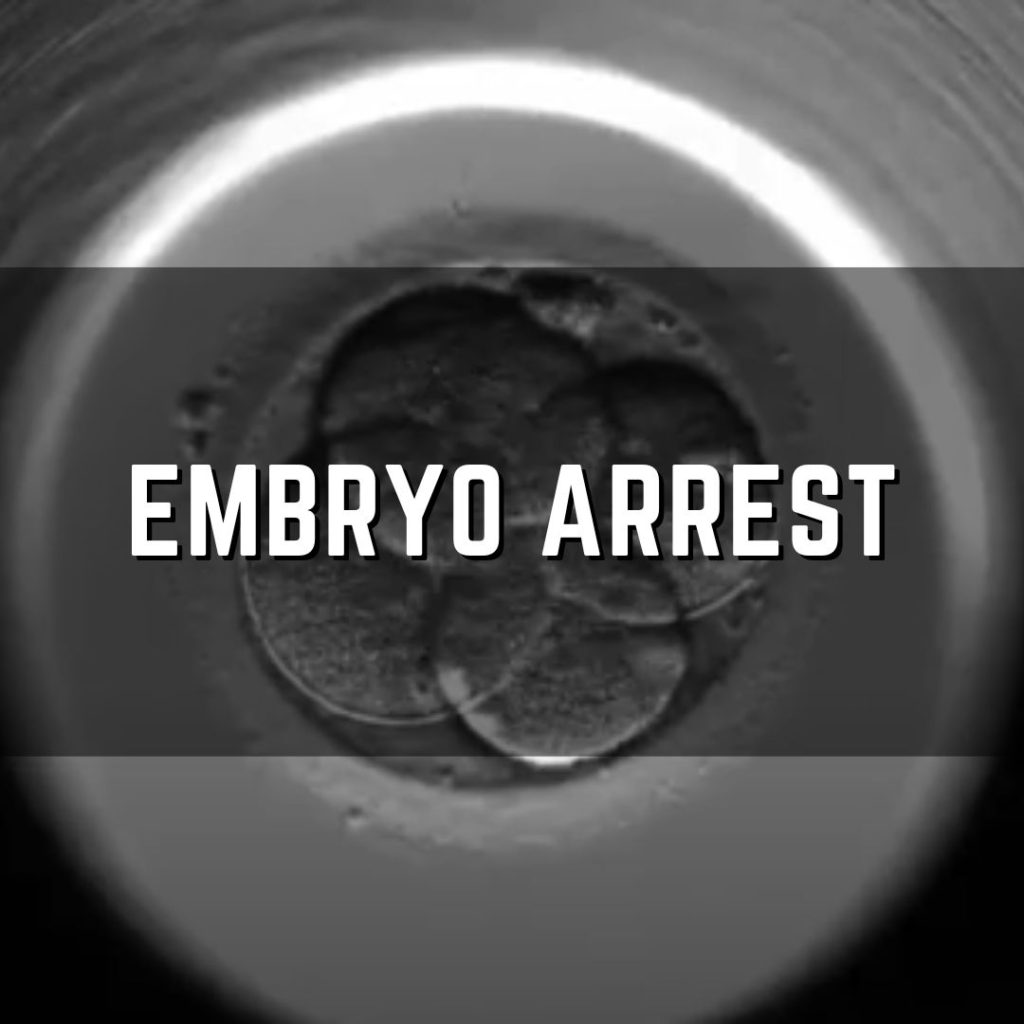
Embryo arrest is when an embryo stops developing, usually before reaching the blastocyst stage. This post explains possible causes, including embryonic genome activation, maternal effect genes, the subcortical maternal complex, aneuploidy, mitochondrial dysfunction, oxidative stress, lab conditions, and sperm DNA fragmentation. Read more.
Reference

About Embryoman
Embryoman (Sean Lauber) is a former embryologist and the founder of Remembryo, an IVF research and fertility education website. After working in an IVF lab in the US, he returned to Canada and now focuses on making fertility research more accessible. He holds a Master’s in Immunology and launched Remembryo in 2018 to help patients and professionals make sense of IVF research. Sean shares weekly study updates on Facebook, Instagram, and Reddit regularly. He also answers questions on Reddit or in his private Facebook group.