

A new method developed by researchers in 2022 in their correspondence in The New England Journal of Medicine, can perform PGT-A in the clinic with cheaper and faster results.
Check my complete guide to PGT-A to get more background on PGT-A (aka PGS testing).
Wei et al. (2022) developed and validated methods for aneuploidy detection using nanopore-based DNA sequencers, that they call “short-read transpore rapid karyotyping” or STORK.
These MinION sequencers are small enough to fit in the palm of your hand, and PGT-A runs can cost as little as $50 per sample. Furthermore, DNA sequencing can be done in 10 minutes (excluding set up time), making it possible to get results the same day to perform fresh transfers.
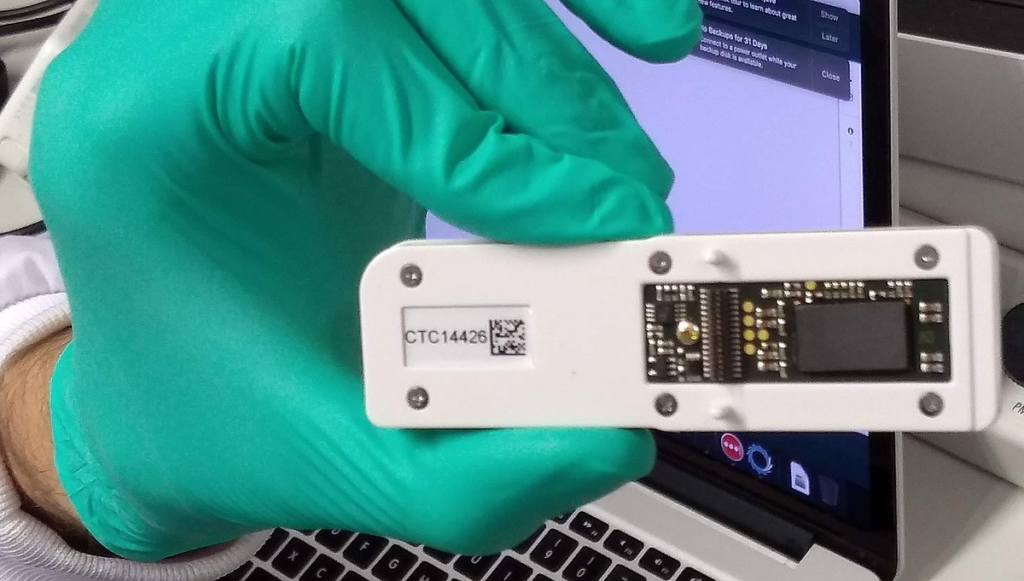

NGS has a higher set-up cost (>$250,000) and a reagent cost per sample of $100-$200, with a turn-around time of 2-10 days. In contrast, STORK has a lower set-up cost ($4,000), a reagent cost per sample of $50, and a faster turn-around time of 2-6 hours.
To validate STORK, they compared outcomes from 52 specimens using traditional NGS technology. They found that diagnoses from STORK were 98.1% accurate, with one reported false negative. This sample was diagnosed as a low-level mosaic by traditional NGS and as a euploid by STORK.
In another analysis, the researchers evaluated the ability of STORK to measure mosaicism, and diluted aneuploid samples to make “mosaics” containing 50%, 40%, 30% and 20% aneuploid cells. They were able determine the percentage mosaicism in samples that had 40% mosaicism or above with high confidence.
Based on this, the limit of STORK to detect mosaicism is around 40%. Traditional NGS can detect 20% differences, and results are often reported as euploid when there’s <20% of cells that are aneuploid, 20-40% as low level, 40-80% as high level and >80% as aneuploid. Since STORK can only detect 40% differences, diagnoses from STORK may report euploids, mosaics and aneuploids differently from NGS. Furthermore, IVF labs may incorporate their own thresholds, as well as normalization and noise-reducing algorithms, and this might also introduce differences in how PGT-A results are reported.
Besides PGT-A, the researchers also validated this method in sequencing products of conception, chorionic villi samples and amniocentesis samples, all of which showed 100% accuracy.
This technology is very exciting, and might mean that PGT-A may become more affordable in the near future!
Reference

About Embryoman
Embryoman (Sean Lauber) is a former embryologist and the founder of Remembryo, an IVF research and fertility education website. After working in an IVF lab in the US, he returned to Canada and now focuses on making fertility research more accessible. He holds a Master’s in Immunology and launched Remembryo in 2018 to help patients and professionals make sense of IVF research. Sean shares weekly study updates on Facebook, Instagram, and Reddit regularly. He also answers questions on Reddit or in his private Facebook group.
Related posts:
 Repeated freezing and thawing impacts IVF outcomes in PGT-A cycles
 Embryo biopsy of small embryos dramatically reduces IVF success rates
 Study finds differences in euploid, live birth rates among PGT-A testing labs
 IVF outcomes following aneuploid embryo transfer
 Comparing frozen embryo transfer/FET protocols
 Improved IVF outcomes when embryos are cultured in groups
 PGDIS releases 2021 guidelines for mosaic embryo transfers
 Paternal (male) effect on embryo aneuploidy examined