
Researchers in a 2021 study compared maternal lifestyle and nutritional habits with egg morphology and reproductive outcomes during IVF, and found that refined sugars and artificial sweeteners had a negative impact, among other findings.
Different studies have already shown that maternal lifestyle choices can impact egg quality, including weight and diet, smoking, and alcohol use.
And don’t forget about men! A recent study found an association between soda intake and poor sperm quality. While other studies have found associations with smoking, marijuana use, alcohol, diet, and heat stress.
Lifestyle and nutrition has an impact no matter which side you’re on!
A recent retrospective, single center study by Setti et al. (2021) included 752 couples undergoing ICSI between 2015 and 2019. Before IVF treatment, they filled out a questionnaire that asked about maternal lifestyle and nutritional habits over the previous 6 months, including:
- Cigarette smoking
- Alcohol use
- Refined sugar intake
- Artificial sweetener intake
- Milk and dairy intake
- Legumes and vegetable intake
- Fish consumption
- Physical activity
Then they associated this with egg morphology (what the egg looks like under the microscope), and reproductive outcomes (implantation, pregnancy, miscarriage, and live birth rates). You can read more about egg abnormalities here.
Now let’s take a look at the results of this study!
🔗 Original studies are referenced in this post or within the linked Remembryo posts.
💡 Reminder: Terms underlined with a dotted black line are linked to glossary entries. Clicking these does not count toward your paywall limit.
Results
Cigarette smoking
- More likely to have abnormal egg morphology (dark/granular cytoplasm, smooth endoplasmic reticulum clusters, or sERCs)
- More likely to have fewer eggs retrieved
- Fertilization rates dropped from 81.4% in non-smokers to 57.4% in those who smoked >10 cigarettes a day
- Blastocyst development rate dropped from 56.3% in non-smokers to 40.8% in >10 cigarettes/day
- Decreased pregnancy and live birth rates and increased miscarriage rate with increased cigarette smoking:
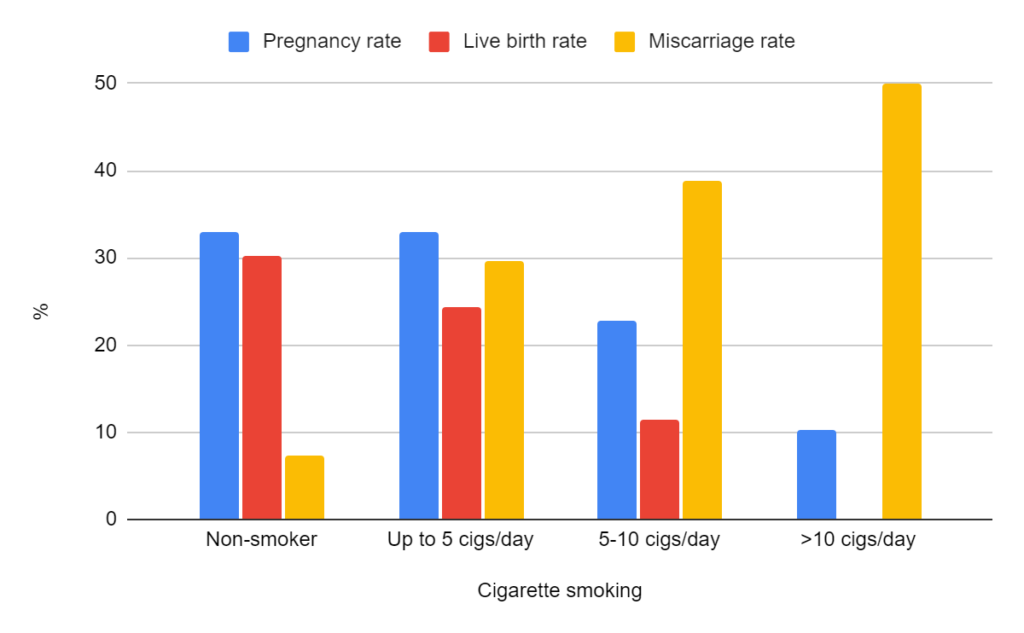
The sample size for these groups was 530 for non-smokers, 88 for up to 5 cigs, 86 for 5-10 cigs, and 48 for >10 cigs.
Alcohol use
- More likely to have abnormal egg morphology (dark/granular cytoplasm, fragmented polar body)
- More likely to have fewer eggs retrieved
- Decreased pregnancy and live birth rates and increased miscarriage rate with increased drinking:
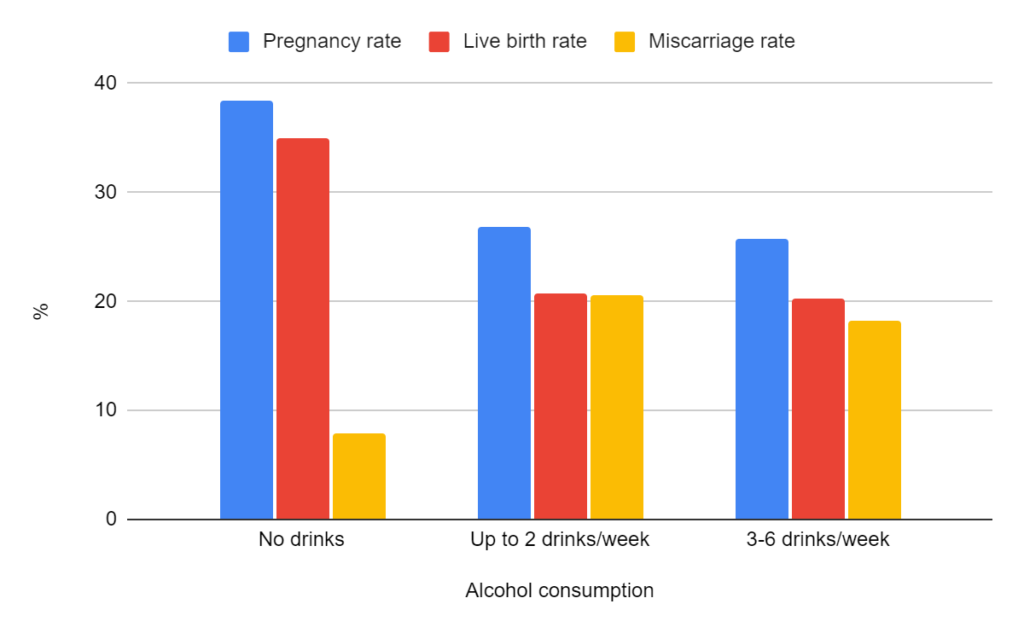
The sample size for these groups were 290 for the no drinks group, 156 for up to 2 drinks, and 294 for the 3-6 drinks. There was a >6 drinks/week group, but there were only 8 women in this group. None had a pregnancy or live birth, but this is a small sample so it’s hard to be sure of the impact.
Refined sugar
- More likely to have abnormal egg morphology (dark/granular cytoplasm, fragmented polar body)
- More likely to have fewer eggs retrieved
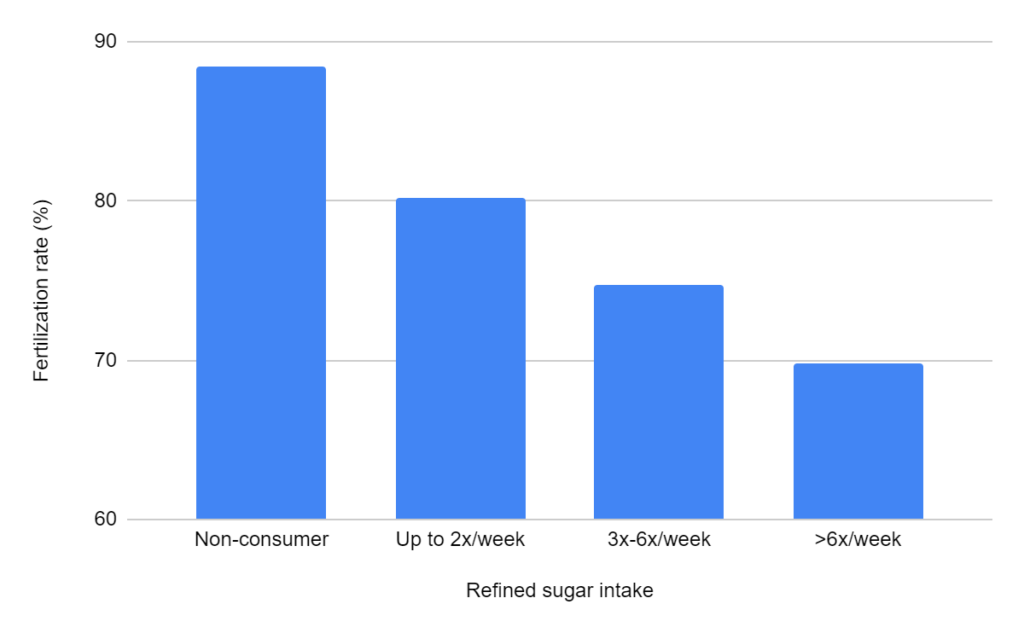
- Lower fertilization rate with increased intake :
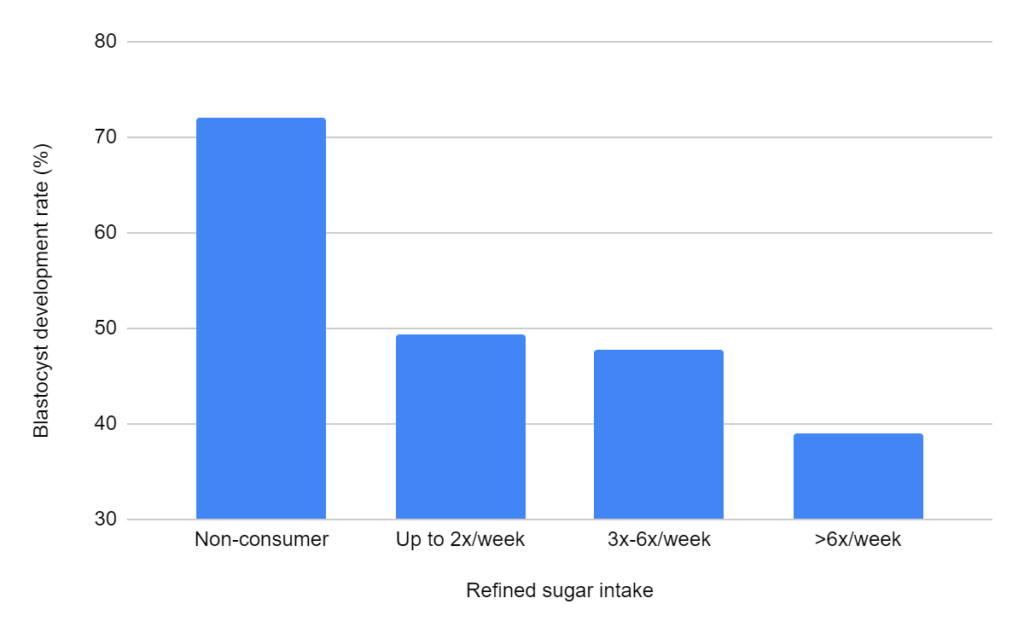
- Lower blastocyst development rate with increased intake:
- Decreased pregnancy and live birth rates and increased miscarriage rate with increased refined sugar intake:
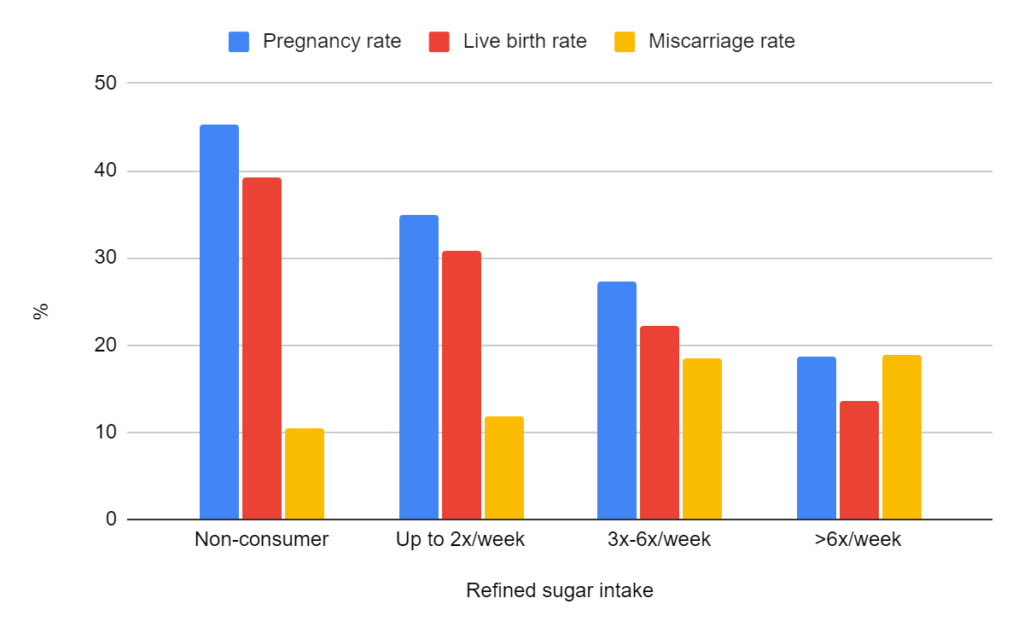
The sample size for these groups was 94 for a non-consumer, 341 for up to 2x, 103 for 3x-6x, and 214 for >6x.
Note that a serving was specified as “any source of refined sugar (regular chocolate, candies, regular soft drinks or refined sugars added to a beverage or food item)”.
Artificial sweetener
- More likely to have abnormal egg morphology (dark/granular cytoplasm, fragmented polar body)
- More likely to have fewer eggs retrieved
- Decreased pregnancy and live birth rates and increased miscarriage rate with increased artificial sugar intake:
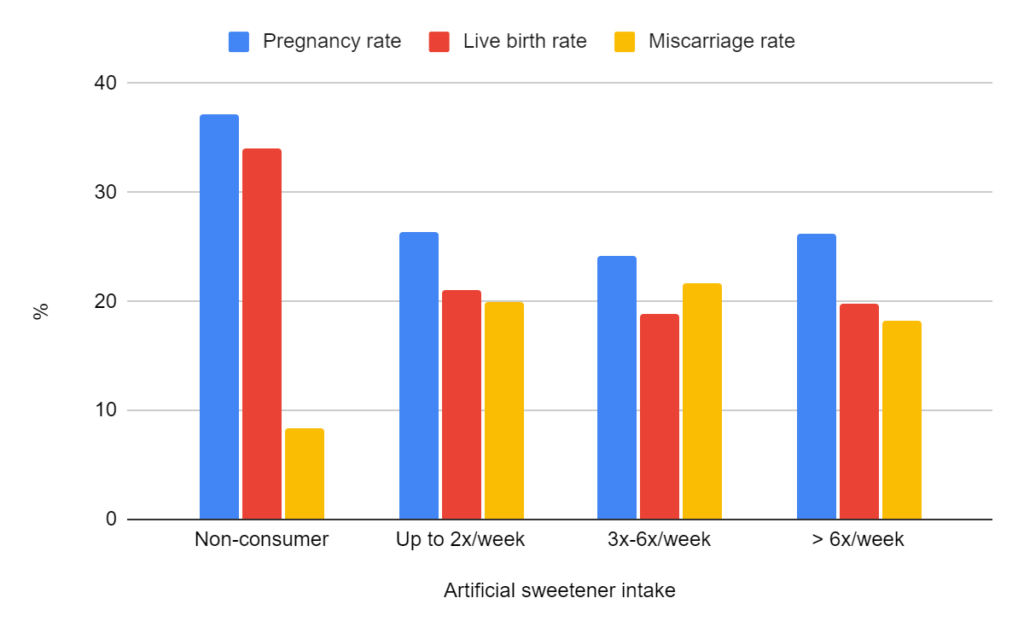
The sample size for these groups was 324 for a non-consumer, 57 for up to 2x, 108 for 3x-6x, and 263 for >6x.
Note that a serving was either “1 sachet or 6 drops”. So I’m assuming this is referring to artificial sweeteners that are added to drinks or coffee/tea. They didn’t specify the type of sweetener, or whether or not this included diet sodas or drinks that already contain artificial sweeteners.
Milk and dairy
- Less likely to have abnormal egg morphology
Legumes and vegetables
- Less likely to have abnormal egg morphology
- More likely to have more eggs retrieved (they didn’t specify)
- More likely to have more mature eggs
- Higher implantation and pregnancy rates with increased intake
A low intake was considered <6 servings/week, moderate 7-13, and high >13. A serving was considered 120 ml or half a cup.
Fish
- Less likely to have abnormal egg morphology
Physical activity
- Less likely to have abnormal egg morphology
- More likely to have more eggs retrieved
- More likely to have higher implantation rate
Low physical activity was considered up to 90 minutes/week, moderate 90-150, and high >150.
Conclusions
In this study smoking, alcohol use, and consumption of refined sugar and artificial sweeteners had a higher chance of producing abnormal egg morphology and lowering reproductive outcomes. On the other hand, consumption of milk and dairy, legumes and vegetables, fish, and physical activity resulted in improved egg morphology. Eating legumes and vegetables and increased physical activity had the additional benefit of improving the number of eggs retrieved and improving reproductive outcomes in IVF such as implantation rate.
A limitation of this study is the nature of the self-reported data, since people can inflate their good habits and downplay their bad habits.
Until controlled (and prospective!) studies are done, with exact amounts of sugar or alcohol for example, it’s hard to know what real effect these things have.
Reference

About Embryoman
Embryoman (Sean Lauber) is a former embryologist and the founder of Remembryo, an IVF research and fertility education website. After working in an IVF lab in the US, he returned to Canada and now focuses on making fertility research more accessible. He holds a Master’s in Immunology and launched Remembryo in 2018 to help patients and professionals make sense of IVF research. Sean shares weekly study updates on Facebook, Instagram, and Reddit regularly. He also answers questions on Reddit or in his private Facebook group.
Related posts:
 Complete guide to egg quality
 Mediterranean diet and IVF – a clinical trial
 Sleep quality and its impact on IVF outcomes
 Impact of supplements on live birth and pregnancy rates in women: a meta-analysis
 RCT compares fertility outcomes with myo-inositol, probiotic, micronutrient supplements
 Egg freezing and thawing
 IVF outcomes examined in eggs with smooth endoplasmic reticulum clusters
 Rising levels of chlormequat, an agricultural chemical linked to infertility, in grain products