
Researchers in a 2022 study published in Human Fertility, has found that contamination of PGT-A samples with sperm DNA is unlikely with conventional IVF, and forcing the use of ICSI may not be necessary.
PGT-A is a technology that analyzes the DNA of an embryo biopsy to determine its ploidy, or how many chromosomes the cells have. An embryo is considered euploid if it contains 2 copies of the 23 chromosomes, and aneuploid otherwise.
Check my complete guide to PGT-A to get more background on PGT-A (aka PGS testing).
Misdiagnosis of an embryo is a real possibility, and according to a study by Friedenthal et al. (2020), error rates per embryo for NGS-based PGT-A are 0.7%. This is mostly due to limitations in the sequencing technology, however misdiagnoses can also come from other potential sources.
One potential source of misdiagnosis has to do with the residual cumulus cells that are attached to the zona of the embryo. These cells nourish the egg while it is in the follicle, and some may remain attached to the zona as the embryo develops. These cells contain the maternal genome and if these cells contaminate the biopsy sample then misdiagnosis of the embryo is possible.

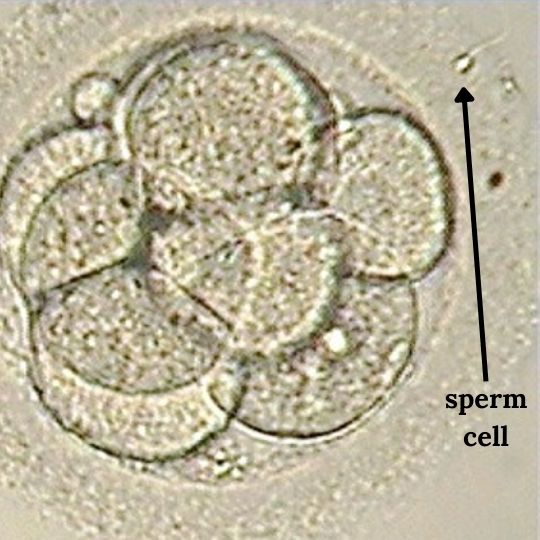
Another potential source for misdiagnosis is contamination with sperm cells, which is mostly an issue when using conventional IVF rather than ICSI. In conventional IVF, sperm are added to a well that contains the egg. The sperm then attach to the zona and “drill” into it using special enzymes to gain entry. Once a single sperm gets in, this triggers molecular events in the egg to cause the zona to harden and any sperm that are embedded in the zona remain stuck. These sperm cells may end up contaminating the biopsy sample and alter the PGT-A results, so conventional IVF isn’t recommended. ICSI involves injection of a single sperm cell directly into the egg, so there is no risk of contamination.
🔗 Original studies are referenced in this post or within the linked Remembryo posts.
💡 Reminder: Terms underlined with a dotted black line are linked to glossary entries. Clicking these does not count toward your paywall limit.
In this study by Lynch et al. (2022), they deliberately contaminate samples with 1, 2, 4, 8 or 10 sperm. These samples were then submitted for PGT-A.
Before the DNA is sequenced to give the results, a first step in PGT-A is to amplify the DNA. This involves isolating the DNA from the cells and then subjecting it to “whole genome amplification” or WGA. This process makes many copies of the embryo biopsy DNA, which is necessary for sequencing.
In this study, they attempted to amplify the samples containing sperm by WGA and found that the sperm DNA was not able to be amplified.
The researchers explain that this is likely due to the extensive packing of sperm DNA in the nucleus. Because sperm DNA is highly compacted, it is not accessible to the enzymes that are needed to amplify DNA and make copies during WGA.
Sperm DNA is highly condensed and inactive, and only after it enters the egg during fertilization is it “decondensed” by special sperm decondensation factors found in the egg. The only way to amplify DNA from sperm outside of this environment is to treat it with different enzymes and chemicals, at elevated temperatures, to encourage the sperm DNA to decondense.
The researchers noted that this applies only to PGT-A and PGT-SR, which make use of WGA before DNA sequencing. PGT-M uses a different process that may be affected by sperm contamination, and in this case ICSI is preferred.
To add to this, the authors performed a literature search and found no reports of misdiagnosis or contamination due to sperm, suggesting the risk of contamination by this route is low.
ICSI, as an add-on, can be very expensive, and with the additional cost of PGT-A it is reassuring that ICSI may not be necessary.
Reference

About Embryoman
Embryoman (Sean Lauber) is a former embryologist and the founder of Remembryo, an IVF research and fertility education website. After working in an IVF lab in the US, he returned to Canada and now focuses on making fertility research more accessible. He holds a Master’s in Immunology and launched Remembryo in 2018 to help patients and professionals make sense of IVF research. Sean shares weekly study updates on Facebook, Instagram, and Reddit regularly. He also answers questions on Reddit or in his private Facebook group.
Related posts:
 Complete guide to mosaic embryos
 Study examines potential of PGT-A on poor quality embryos
 Ranking 1,000 mosaic embryo transfers
 144 “abnormal” (aneuploid/mosaic) embryos and their outcomes
 Paternal (male) effect on embryo aneuploidy examined
 Aneuploid-only first PGT-A cycle has no impact on future PGT-A outcomes
 Euploid embryos show reduced implantation potential with advancing maternal age
 A look at how PGT-A results change with age, using data from over 86,000 biopsies