
Researchers in a 2024 study tested 53 lots of plastic consumables in the IVF lab for embryo or gamete toxicity, and found that there was a higher risk of toxicity when more plastic consumables were used.
Plastics are commonly used in the IVF lab, but there are concerns that they could be toxic for embryos, or gametes like sperm or eggs.
Plastics can be toxic by leaching substances into culture media, or by releasing volatile organic compounds (VOCs) that can accumulate in incubators and damage embryos and gametes. This can cause short-term damage and could result in embryos arresting. There could also be long-term effects to the fetus and child.
Because of these concerns, it’s recommended that plastic medical equipment undergo quality control testing to ensure there’s no damage embryos or gametes.
The problem is that most plastic materials in the lab are tested alone and not in combination. It’s possible that the added toxicity of multiple plastics can have an effect on embryos and gametes, which is what Delaroche et al. (2024) aimed to investigate.
🔗 Original studies are referenced in this post or within the linked Remembryo posts.
💡 Reminder: Terms underlined with a dotted black line are linked to glossary entries. Clicking these does not count toward your paywall limit.
What types of plastics did this study evaluate?
The study included 14 categories of disposables used in routine IVF procedures, provided by major companies in the field. They were devices used for sperm and egg collection (cups, condoms and egg aspiration needles), manipulation (flasks, tubes, tips, pipettes, embryo transfer catheters, syringes and gloves), culture (dishes), and storage (straws).
Most of these plastic consumables used were certified as being free of toxicity before purchasing, by either the mouse embryo assay (MEA) or the human sperm motility assay (HMSA). After exposure, mouse embryos that don’t grow to blastocyst, or human sperm that decreases in motility, would be considered exposed to toxicity and wouldn’t pass certification.
They tested 36 consumables that included a total of 53 lots.
How were the plastics tested for embryo or gamete toxicity?
In this study, they used the human sperm motility assay (HMSA) to check for decreases in sperm motility due to exposure to toxic compounds. Sperm was prepared from patient donors that had normal semen parameters, and was processed to 70% progressive motility.
For the HMSA, the sperm preparation was split into two: the control sperm was transferred to a “control tube” for 24 hours, while the test sperm was exposed to the test plastic for at least 30 minutes before being transferred to a “test tube” for 24 hours. If the test sperm was exposed to toxic compounds, then it would become compromised and have a lower motility compared to the control sperm.
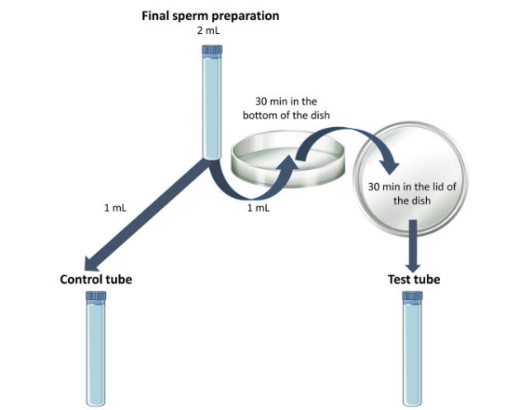
Plastics were tested for toxicity individually at first, and if the plastic wasn’t toxic, then it would be included in combination with other plastics as a separate analysis. Everything was tested 3 times. Since there wasn’t enough semen for each test, they would have to use different patient samples for these repeated tests, and in some cases on different days (this is a limitation of the study).
After the test, the test and control sperm were compared for their motility and their “sperm motility index” or SMI was calculated. If the motility of the test sperm was less than 85% of the control sperm, in two out of three of the tests, then the test sperm was considered exposed to toxicity.
For example, if the motility of the control sperm was 50% and the motility of the test sperm was 30%, then the sperm motility index would be 30%/50% = 60%. This is less than 85%, so the test sperm was exposed to toxicity that caused a lower motility.
You can see the specifics of how the plastic consumables were tested below:
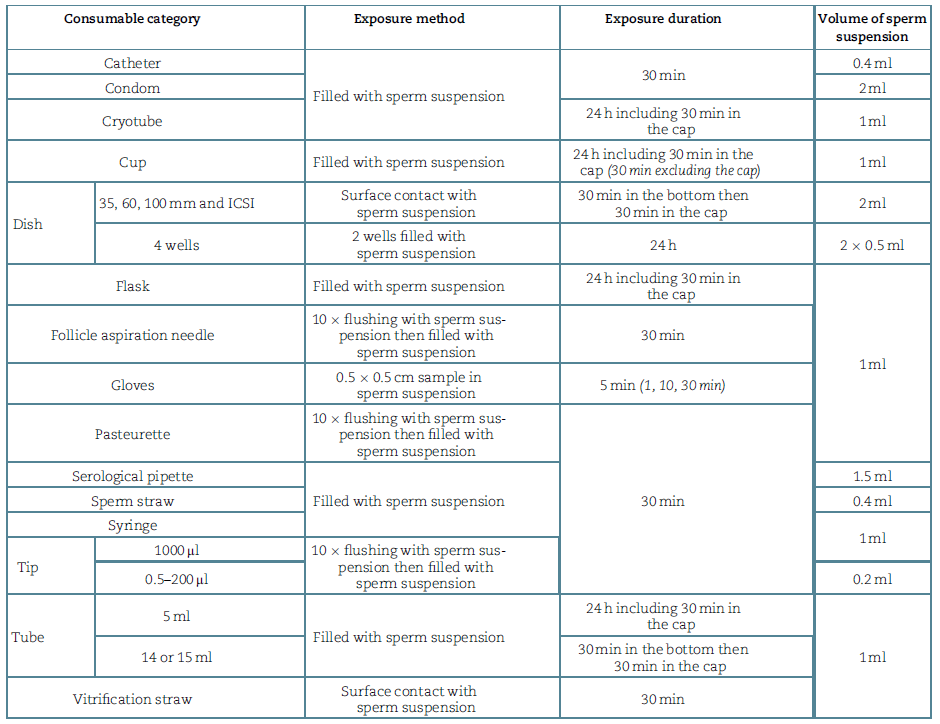
Most plastics not toxic after single HMSA test
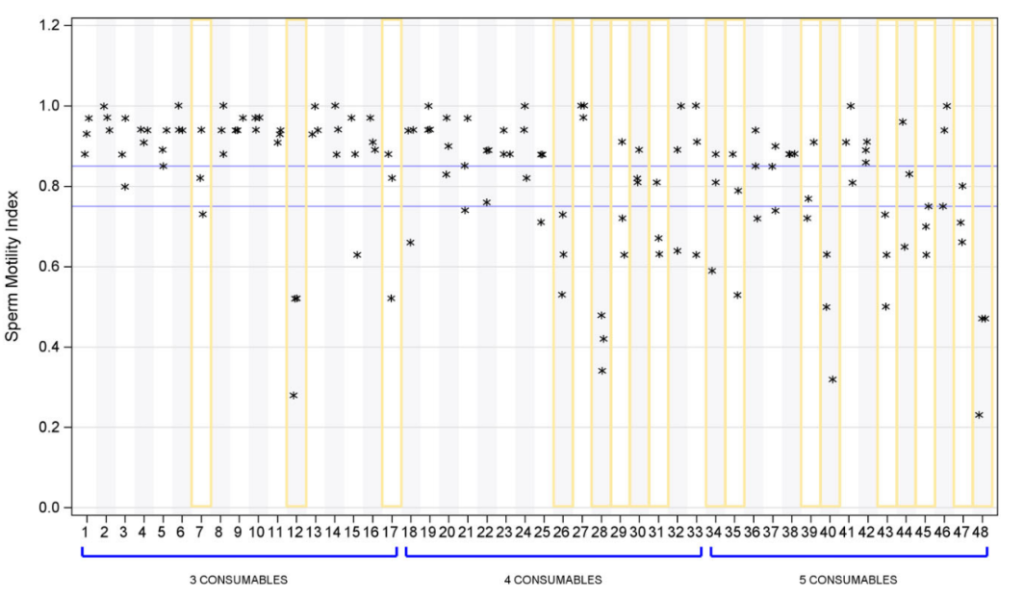
First, they tested the 53 lots of the consumables alone, and found that 92% of them had SMI values above 85% (0.85). You can see this below, with most consumables (the asterisks) being above 0.85 (shown on red to the right). Remember, they tested each lot 3 times so that’s why there’s so many asterisks, and two tests below 0.85 for a particular lot were needed to show toxicity. The four lots bordered by yellow lines had 2 tests below 0.85, indicating toxicity.
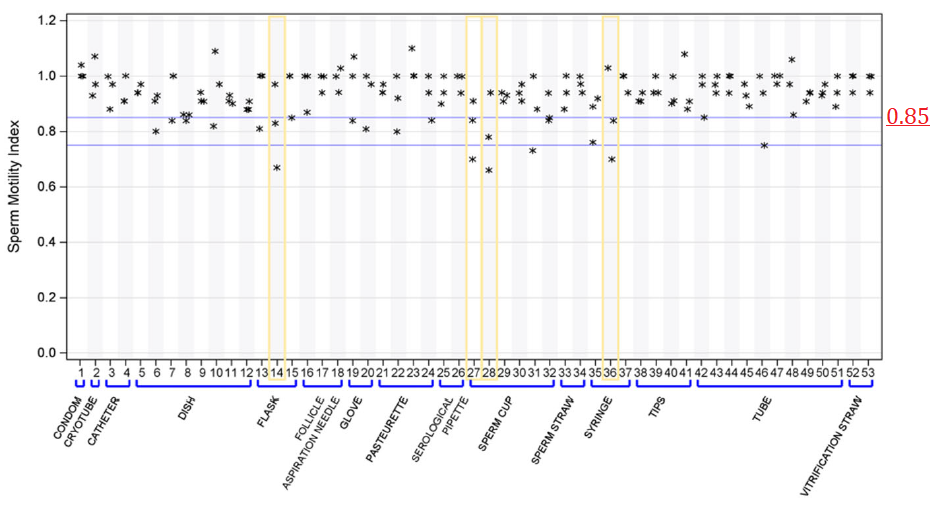
The 4 that failed included one of the lots of a 25 cm^2 flask (for culturing), 1 lot of 1 ml syringes and 2 lots of sperm collection cups.
The flask and syringe that failed actually didn’t have any certification that they were MEA or HMSA tested, so this wasn’t surprising. Regardless, the authors said that they removed these products from routine use in their lab after they failed testing.
However, the sperm collection cups did have certification so the researchers repeated the test. This time, they didn’t expose the sperm preparation to the cap (which corresponds to how the manufacturer recommends using the product), and exposed it for 30 minutes instead of 24 hours. The sperm cups passed when doing it this way! This means that either prolonged exposure to the cup, or exposure to the cap, is what caused a decrease in sperm motility.
The researchers tested gloves for a few time points, and found that there was toxicity after 10 minutes, but not before. If gloves are going to contact culture media where embryos are, or semen, it will be for a very short amount of time, so this is reassuring. Although, some lab workers wear gloves for long periods of time, so I’m wondering what effect worn gloves would have on this test.
Many plastics show HMSA toxicity in combination
Next they did 48 combinations of the plastic consumables:
- 17 combinations of 3 consumables (ie. a 4-well dish, an ICSI dish and a pasteur pipette).
- 16 combinations of 4 consumables.
- 15 combinations of 5 consumables.
This is meant to mimic the exposure of sperm/eggs/embryos to different plastic consumables as they’re transferred into different dishes/tubes/cups using pipettes, which is typical in an IVF lab. Exposure was done again for at least 30 minutes.
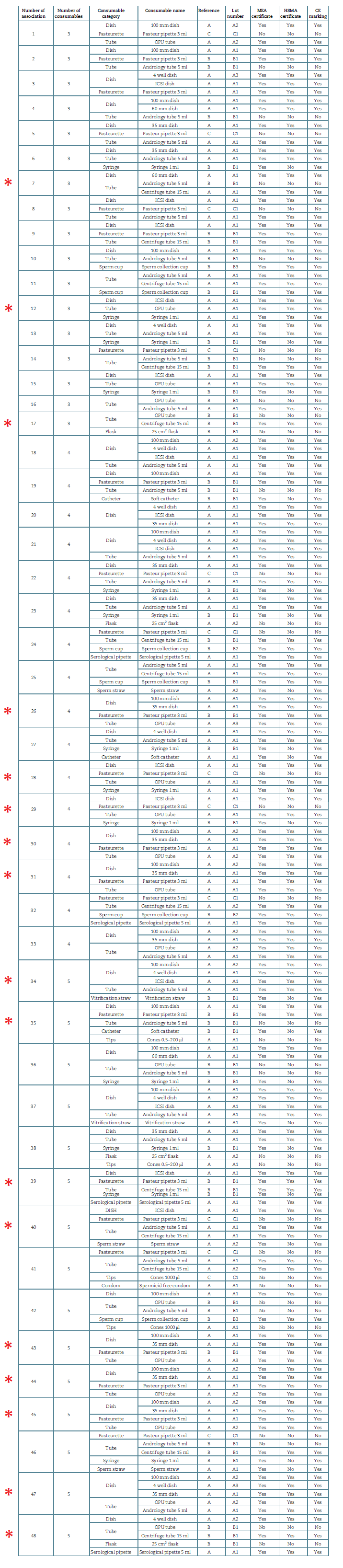
Of all the combinations, 35% (17 of 48) showed toxicity:
- 18% of the 3-consumable tests showed toxicity.
- 31% of the 4-consumable tests showed toxicity.
- 60% of the 5-consumable tests showed toxicity.
So the more the sperm preparation from the HMSA was transferred to different plastic consumables, the higher the chance that it would show toxicity.
You can see the results below:
You could see the combinations below, with an asterisk next to the ones that showed toxicity. Notice how some of them previously passed MEA and HSMA testing by the manufacturer. This means that even though the individual plastic consumables were certified, when they were used in combination the overall effect could be toxic. This shows that a combination of consumables might be leaching chemicals that can add up to a toxic level.
Conclusions
Generally, exposure of sperm to a single plastic consumable didn’t show toxicity. However, when a sperm sample was transferred to a combination of plastic consumables, like what would be done in a typical IVF lab environment, the chance of toxicity increased.
The majority of these plastic consumables had been certified and passed MEA and HSMA tests by the manufacturer, but when used together they showed a toxic effect.
What’s causing the toxicity isn’t clear, but it could be related to the plastic’s composition, production process, handling and packaging, sterilization or transport process, the authors write.
Most of the IVF consumables in this study were made of polystyrene, polypropylene and polyethylene. It’s possible that these plastics produced microplastics or nanoplastics that can accumulate in gametes or embryos to cause damage, or that chemicals like BPA or bisphenol analogues were present.
These toxins could interfere with the sperm’s metabolism, or compromise sperm in a way that lowers their motility. These same toxins might have an impact on embryo development, to potentially reduce fertilization or the ability of the embryo to form a blastocyst. Long term effects are also possible, as suggested by a recent study that found massive alterations in placental gene expression in mouse embryos grown on plastic dishes. Check my post Mouse study shows altered placental gene expression when plastic is used to culture embryos for details.
The authors note that the lids of plastic consumables may be particularly toxic, since these are not normally considered when the manufacturer tests their products. The FDA recommends testing only the parts of a product that are in direct contact with gametes and embryos during clinical use, so caps wouldn’t normally be tested. However, there could be instances where the gametes or embryos make contact (like sperm contacting the lid of the collection cup, or tubes being overfilled in the lab or tipping over).
Limitations of this study include:
- The choice to use 85% for SMI is ambiguous, and other studies have been more lenient.
- The 30 minute exposure time may be excessive compared to what happens in the lab, although this is what’s recommended by the FDA for MEA tests, and other organizations recommend a longer time.
- Because of limited availability of semen, they used semen from different individuals and from different days for their replicates, which could introduce variability in the results. Sperm from different individuals could be more or less tolerant to exposure.
- They didn’t measure toxin levels, for example BPA.
Overall, the authors recommend internal testing of consumables before they’re used in the lab, particularly those that aren’t certified, and to consider testing of consumables in combination. They also call for the re-evaluation on the use of glass consumables in the IVF lab.
Related studies
To learn more about this topic, you can check out a number of studies referenced in this study below (7 links):

Reference

About Embryoman
Embryoman (Sean Lauber) is a former embryologist and the founder of Remembryo, an IVF research and fertility education website. After working in an IVF lab in the US, he returned to Canada and now focuses on making fertility research more accessible. He holds a Master’s in Immunology and launched Remembryo in 2018 to help patients and professionals make sense of IVF research. Sean shares weekly study updates on Facebook, Instagram, and Reddit regularly. He also answers questions on Reddit or in his private Facebook group.
Related posts:
 Mouse study shows altered placental gene expression when plastic is used to culture embryos
 Risk of poor ovarian response with repeat IVF cycles
 How many embryos to transfer? 2021 ASRM recommendations
 2 embryos or 1? The risks of a double embryo transfer for women under 35
 Improved IVF outcomes when embryos are cultured in groups
 Embryologist and physician success rates variable, not related to experience
 Large Nordic study examines childhood cancer rates after IVF
 An Italian consensus on key performance indicators for assessing IVF clinics