
A 2025 case report describes a live birth in a 46-year-old woman using her own eggs through IVF, adding to a small number of published cases showing that pregnancy at this age, while uncommon, is still possible without add-ons or PGT-A.
Although IVF has helped many people with infertility build their families, age remains one of the more difficult hurdles to overcome.
Success rates begin to decline in the mid-30s, and for most patients using their own eggs, chances of success are lower by the mid-40s. This has led to many fertility centers to have age limits for women using their own eggs.
Live births after age 45 using your own eggs are uncommon, mainly due to an increased risk of chromosomal abnormalities (aneuploidy) in the eggs. This is largely because eggs are formed before birth and remain in a paused state for decades, during which the structures responsible for proper chromosome separation degrade (read more in my post Chromosomal errors in IVF: What is aneuploidy and what causes it?).
Additionally, age-related mitochondrial decline also reduces the energy needed for chromosome separation in meiosis, further increasing the risk of errors that can lead to miscarriage or failed implantation (read more in my post Mitochondria and egg quality).
In a new case report by Elzeiny 2025, researchers report a live birth in a 46-year-old woman who used her own eggs, without the use of add-ons or PGT-A. The authors also reviewed other published cases of women over 45 who achieved live births with autologous IVF.
🔗 Original studies are referenced in this post or within the linked Remembryo posts.
💡 Reminder: Terms underlined with a dotted black line are linked to glossary entries. Clicking these does not count toward your paywall limit.
The clinic in Australia had a cutoff of 46 for IVF with one’s own eggs. The patient came in just before her 46th birthday hoping to try one final cycle. She had previously had a successful IVF pregnancy at age 43.
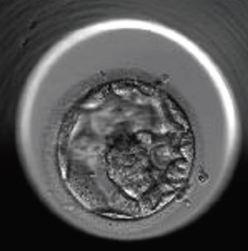
She retrieved 6 eggs, of which 4 were mature and 3 fertilized by ICSI. One embryo arrested, and the other two developed into blastocysts. She transferred a single 4AA blastocyst and became pregnant, ultimately delivering at age 46.
The authors of the case report highlight other published cases involving women 45 years and older who gave birth using their own eggs:
- Prato et al. (2005), Check et al. (2011), Trolice (2014) and Yoshida et al. (2004) each reported on a live birth from a 46 year old.
- Rani et al. (2015) report on a live birth from a 49 year old who transferred 3 day 3 embryos and gave birth at age 50.
- Wu et al. (2022) report on a live birth from a 47 year old who transferred a single day 3 embryo and gave birth at age 48.
While this may offer reassurance to those hoping to try with their own eggs, these successes remain uncommon and become less likely with increasing age. The authors also note that advanced maternal age carries higher risks of complications such as gestational diabetes, hypertension, placental issues, cesarean delivery, and chromosomal conditions like Down syndrome.
Here’s some additional posts you might want to check out on Remembryo:
- Cumulative live birth rates in women aged 40+, after up to 10 transfers. In a Japanese study of women aged 40–48, cumulative birth rates ranged from 55.6% at age 40 to 4.4% at age 45, with no live births reported for ages 46–48.
- Cumulative live birth rates in women aged 43+, after up to 10 cycles. In a US study of nearly 25,000 women, live birth rates declined from 9.7% at age 43 to 1.3% at age 50 or older, with most success seen in the first 1–5 cycles. Yes, this study reports live births in women 50 or older! This is based on about 150 cycles, but it doesn’t give further details.
- IVF and pregnancy outcomes for women 45+. In this single-center study, live birth rates per transfer were 4.4% at age 45, 0.8% at 46, and none reported at 47 or older.
- Early triggering with the “HIER” protocol may be a better approach for older women. Researchers in a 2023 study found that older women that are triggered earlier produce immature eggs that may be more competent than mature eggs after rescue IVM.
- Survey investigates age policies for IVF treatment among US clinics. Researchers in a 2023 study conducted a survey and found that most US clinics have an age policy for providing IVF treatment, with maternal risks of pregnancy as the leading concern.
Related studies
These additional studies were referenced by the authors of the paper and haven’t been covered on Remembryo. They may be helpful if you’re exploring this topic further. This section is available for paid subscribers.

Reference

About Embryoman
Embryoman (Sean Lauber) is a former embryologist and the founder of Remembryo, an IVF research and fertility education website. After working in an IVF lab in the US, he returned to Canada and now focuses on making fertility research more accessible. He holds a Master’s in Immunology and launched Remembryo in 2018 to help patients and professionals make sense of IVF research. Sean shares weekly study updates on Facebook, Instagram, and Reddit regularly. He also answers questions on Reddit or in his private Facebook group.
Related posts:
 Sleep quality and its impact on IVF outcomes
 Cumulative live birth rates in women aged 40+, after up to 10 transfers
 Study compares IVF cumulative live birth rates based on age, eggs retrieved, diagnosis
 Cumulative live birth rates after up to 15 transfers with untested embryos
 Study estimates number of frozen eggs needed for euploids, live births
 Study finds poor ovarian responders have no further live births after 4 cycles
 Pilot study shows improved IVF outcomes after spindle transfer in women with poor egg quality
 Meta-analysis combines 74 studies to examine factors linked to euploid transfer success