
Embryo implantation is the process of the embryo embedding into the uterine lining to create a pregnancy. This post will discuss how this happens and how a “receptive” lining can encourage this process. We’ll also get into the role of the immune system (NK cells), implantation failure, and treatments for implantation failure.
This is an older post (from 2019) that may contain out-of-date information. Please bear with me as I update some of my older posts. For the latest information on a topic presented here, search for that topic and check out more recent posts. Thank you!
🔗 Original studies are referenced in this post or within the linked Remembryo posts.
💡 Reminder: Terms underlined with a dotted black line are linked to glossary entries. Clicking these does not count toward your paywall limit.
Table of Contents
What is embryo implantation?
Implantation is the process where the embryo attaches to the uterine lining (endometrium) and embeds itself into the tissue. This happens around Day 5 or so of the embryo’s development.
As the embryo develops, it eventually hatches from its zona (shell) to expose cells of the trophectoderm which are very sticky, especially to the cells that make up the endometrium.
The endometrium itself undergoes changes, caused mainly by progesterone, to cause it to become receptive.
Here’s an outline of the implantation process:
Positioning – The embryo needs to hatch and position itself to make contact with the endometrium

Attachment – Next the cells of the trophectoderm lock onto the endometrium using specialized velcro like molecules called cell adhesion molecules (CAMs).

Invasion. The binding of these CAMs sends signals to the trophectoderm/endometrium which then causes important changes for embryo implantation:
- The cells of the trophectoderm start to change into
syncytiotrophoblast cells which are great at digging into the endometrium - Once across, the embryo begins to connect with the mother’s blood supply (not shown below), which will nourish the embryo until the placenta forms.

.
But illustrations are boring! How about a real picture of an blastocyst implanting:

None of this would be possible without a receptive uterine lining!
What makes the endometrium receptive for implantation?
When the endometrium is “receptive” it is in a state that is most compatible with embryo implantation to lead to a pregnancy. This is a time sensitive event and there is a “window of implantation” where the uterus is most receptive.
The window of implantation is usually a 4-5 day period when progesterone levels reach their peak around cycle days 19-20 (or about 5-6 days after ovulation) (Lessey 2011).
During this time the endometrium undergoes changes to become receptive (Okada 2018):
- Specialized cells secrete factors to promote implantation
- Immune cells accumulate to develop embryo tolerance (to prevent rejection) and to provide factors to support implantation
- Re-modelling of blood vessels occur in anticipation for the growing fetus
Remember, these events happen with or without embryo implantation and if an embryo doesn’t implant, then menses occurs and the whole cycle starts over.
How can we tell the endometrium is receptive? There’s a few ways:
- Endometrial thickness, volume, pattern, blood flow, contractions
- Hysteroscopy inspection
- Endometrial pattern (triple line)
- The ERA test
Let’s look at a couple in more detail:
Endometrial thickness
The thickness of the endometrium can be measured using ultrasound and this can be used to predict receptivity. The image below shows an ultrasound of the uterus that measures 7.3 mm.

So does a thicker lining actually improve success? It’s controversial!
Heger et al. (2012) show that there is a lot of opinions over ideal thickness for fresh transfers, and in some cases there is no association with pregnancy rates.
Liu et al. (2018) examined over 40,000 transfers and show decreasing success for every 1 mm drop in thickness:
- Women with thickness <8 mm showed a progressive decrease from 41% live birth to <33% (fresh)
- <7 mm showed a progressive decrease from 29% to <26% (frozen)
Kasius et al. (2014), in their meta-analysis of 22 studies, didn’t actually find many women who had <7 mm thickness, but when they did it was associated with lower pregnancy. However, after some fancy statistics, they concluded that endometrial thickness doesn’t do a very good job in predicting success.
Cruz et al. (2014) reported a live birth from an ultra thin lining of 3 mm! So anything is possible, but it seems that a thicker endometrium is associated with better success.
Endometrial Receptivity Array
The endometrial receptivity array test (ERA test) can tell you whether or not your endometrium is receptive. To do the ERA test, a “mock cycle” is performed as though you’re doing a frozen embryo transfer except instead of transferring an embryo, a biopsy of the uterine lining is taken!
This biopsy sample is a snapshot of what the lining looks like when an embryo would be transferred. The sample is sent off for testing to look at how certain genes are expressed. This information tells us if the uterine lining is receptive or not.
Whether it works or not…It’s actually pretty controversial! Craciunas et al. (2019) reviewed the current data and in some cases it works, in others not so much.
The selective endometrium
The endometrium is pretty smart! Why waste resources on an embryo that won’t produce a baby? That’s why the endometrium can “sense” when an embryo isn’t competent.
Teklenburg et al. (2010) found that good quality embryos didn’t really motivate the endometrium to do anything, but arrested embryos were able to inhibit endometrial cell responses.
Another study by Brosens et al. (2014) showed that poor quality embryos could alter 449 gene vs only 15 for competent embryos. So if the embryo is bad, the endometrium responds much more dramatically than if the embryo is good.
What’s interesting is that aneuploid embryos that implant and ultimately miscarry might have ways of appearing silent to the endometrium (Macklon and Brosens 2014).
Transfer of good and poor embryos
There isn’t too much data on this but here’s what I’ve found.
Wintner et al. (2017) compared success rates in women who transferred two good embryos or a good and a poor embryo. They found no difference in pregnancy, live birth, or miscarriage rates.
Sterzik et al. (2016) found that implantation and pregnancy rates dropped when transferring a good + poor quality embryo vs transferring a single good embryo (37% vs 47% pregnancy, 20% vs 47% implantation).
And just because an embryo looks good doesn’t mean it has the right stuff – it’s possible that a good looking embryo might be bad on the inside and still inhibit implantation. So even transferring two good quality embryos might be detrimental! The data is not clear and more work needs to be done.
Immunology and embryo implantation
Immune cells play their biggest role in preventing infection, but they have multiple functions.
Did you know that tumor cells frequently form in your body, but the immune system destroys these cells before they become cancer? Thank you immune system!
Immune cells are also involved in fertility! During implantation, the surrounding endometrium is rich in immune cells with most of these cells being NK cells (Mor et al. 2017):
- About 70% NK cells
- 20-25% macrophages
- 3-10% T cells
These cells can do different things – depending on the context! And of course there is plenty of controversy in the literature.
Some people believe that the immune system can reject embryos, similar to the way organs are rejected during transplant. This group favors immune suppression using immunotherapies (Hajipour et al. 2018).
On the other hand, others believe that immune cells have more of a supportive function for embryo implantation and suppression does no good (Mor et al. 2017).
So let’s look take a closer look at some of my favorite topics in biology (I love the immune system and you should too!).
Natural Killer (NK) cells
The immune system’s job is to identify and eliminate potential threats to the body. It uses different cells to do this. One of these cells is the natural killer (NK) cell.
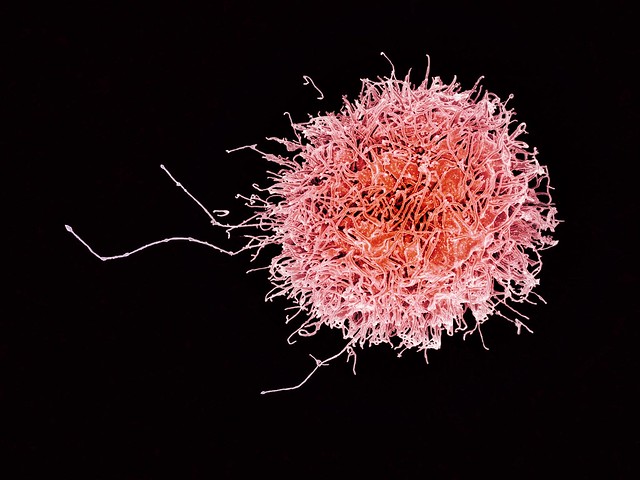

There’s different types of NK cells that have different behaviors. For embryo implantation, we’re really interested in the peripheral blood NK cells (pbNK cells) – which float around in the blood and act like a textbook “killer” cell – and the uterine NK cells (uNK cells).
These uNK cells hang around at the implantation site and don’t seem to be doing much killing at all! In fact they might play a supportive role for implantation (Moffett et al. 2015).
Embryo implantation failure
Implantation failure is when there is no ultrasonic evidence of an intrauterine gestational sac (at 3-5 weeks). It could occur earlier on when the embryo attaches, or can occur several weeks later. If no gestational sac forms, then it’s considered implantation failure. (Coughlan et al. 2013)
Craciunas et al. (2019) state “It is estimated that embryos account for one- third of implantation failures, while suboptimal endometrial receptivity and altered embryo–endometrial dialogue are responsible for the remaining two-thirds”.
So let’s take a closer look at how implantation failure can happen.
Maternal Age and Aneuploidy
Maternal age is considered a major force in determining success (Bashiri et al. 2018):
- With advanced age there is increased embryo aneuploidy
- Decreased pregnancy rates and live birth rates
- Higher rate of biochemical pregnancy
Lifestyle
Body weight has been linked to implantation failure (Bashiri et al. 2018)
- Women with higher BMI (>30 kg/m^2) have reduced implantation vs normal BMI (<25 kg/m^2)
- Women with BMI >40 have higher risk of miscarriage/biochemical pregnancy
- Oocyte quality may be linked to this
Smoking (Bashiri et al. 2018):
- Increased risk of miscarriage
- Reduced pregnancy and live birth rates
Stress (Bashiri et al. 2018):
- Increased levels of the stress hormone Cortisol is associated with a greater risk of miscarriage within the first 3 weeks of pregnancy
Infection
Bacterial infection can lead to inflammation of the endometrium in a condition called chronic endometritis. A variety of common bacteria can cause this although sexually transmitted Chlamydia can also be responsible. The increased inflammation can upset the balance of immune cells at the endometrium and this could impact receptivity. (Bashiri et al. 2018).
Embryo implantation related molecules
Various molecules play roles in implantation and lower (or higher) levels might impact the process
(Bashiri et al. 2018):
- Low levels of LIF are associated with implantation failure
- Altered expression of CAMs might prevent trophectoderm/endometrium binding
- Altered Th1/Th2 cytokine environments
- Prostaglandins, Phospholipase A2, etc.
Anatomical abnormalities
Polyps and fibroids can cause distortion of the endometrial cavity and can prevent embryo attachment to the lining (Bashiri et al. 2018).

Genetics
Besides aneuploidy which can be related to egg/sperm quality, translocations or inversions can be inherited by the embryo if these exist in the genetics of the parents. Karyotyping may be recommended (Bashiri et al. 2018).
Thrombophilia
Thromobophilia is a disorder with increased blood clotting inside a blood vessel (obstructing blood flow) which may hinder implantation. Trombophilia can be inherited as mutations in Factor V (blood clotting protein) or the MTHFR gene (Safdarian et al. 2014).
Treatments for implantation failure or recurrent loss
There are several lines of treatment for embryo implantation failure and recurrent miscarriage.
Immunotherapy
Immunotherapies are treatments that suppress the immune system or more specifically NK cells. The evidence for NK cells actually being harmful to embryo implantation is controversial.
Generally, immunotherapies don’t have good supporting evidence: the HFEA gives this a red light – no evidence that the treatment is safe and effective. However, as with all things on this blog, your mileage may vary so ask your doctor what they think.
IVIG
IVIG is an IV infusion of human derived antibodies. How it functions is complex but essentially it suppresses immune cell activity (Jolles et al. 2005).
- A Cochrane review found no increase in live birth (8 RCTs) (Wong et al. 2014)
- Based on ASRM, 2018 guidelines there were 2 high quality studies that found no difference in pregnancy/live birth; and 6 lower quality studies that found increased live birth.
Intralipids
Emulsified fat that is delivered by IV. Believed to reduce the activity of NK cells which may impact implantation. Considered a safer and more affordable treatment compared to IVIG.
- 1 RCT found no difference in chemical pregnancy rate, but an increased live birth rate (Dakhly et al. 2016)
- 1 retrospective study found no difference in live birth rates in women with recurrent losses with increased NK cells (Martini et al. 2018).
Prednisone (prednisolone)
Predisone is a glucocorticoid that functions as an anti-inflammatory and immunosuppressive drug. It is used to enhance implantation and prevent recurrent miscarriage. Robertson et al. (2016) reviewed the evidence:
- Some studies showed increased success while others showed no benefit: controversial
- Inconsistent protocols makes interpretation difficult (prednisone, methylprednisone, etc.)
- May act in suppressing blood vessel development
Embryo glue
Embryo glue contains hyaluronic acid or HA which is believed to make embryos more “sticky” to attach to the endometrium.
Based on a 2015 Cochrane review that looked at 21 studies (Bontekoe et al. 2015):
- Increase in live birth, pregnancy rate, and multiples (expected since HA will allow more than 1 embryo to stick in multiple transfers)
- Not stage specific – works for cleavage stage and blast stage
- No increase in miscarriage or other adverse effects
- Overall increase of about 8% live birth
Endometrial scratch
An endometrial scratch is where a device is inserting into the uterus to “scratch” the endometrium. This causes tissue damage and inflammation which provides a environment that promotes receptivity (Gnainsky et al. 2014).
A Cochrane review looked at 14 studies between day 7 of the previous cycle and day 7 of the embryo transfer cycle (Nastri et al. 2015):
- Increase in live birth (9 RCTs, moderate quality evidence)
- Increase in pregnancy rate (13 RCTs, moderate quality evidence)
- No evidence of increase in miscarriage (9 RCTs, low quality evidence)
A recent large RCT (1300+ women) found no increase in pregnancy rates or miscarriage with the endometrial scratch (Lensen et al 2019) – you can read more about this study here.

About Embryoman
Embryoman (Sean Lauber) is a former embryologist and the founder of Remembryo, an IVF research and fertility education website. After working in an IVF lab in the US, he returned to Canada and now focuses on making fertility research more accessible. He holds a Master’s in Immunology and launched Remembryo in 2018 to help patients and professionals make sense of IVF research. Sean shares weekly study updates on Facebook, Instagram, and Reddit regularly. He also answers questions on Reddit or in his private Facebook group.
Related posts:
 Meta-analysis of commonly used IVF immunotherapies shows no benefit
 Evidence-based recommendations from ESHRE for 27 IVF add-ons
 Why do embryos in IVF fail to implant or miscarry?
 Meta-analysis finds no difference in pregnancy outcomes when using the ERA
 RCT finds no change in birth rates for standard or ERA-timed euploid transfer
 Endometrial thickness and pregnancy outcomes after 96,000 embryo transfers
 IVF pregnancy outcomes after intrauterine PRP: a 2022 clinical trial
 Increases in immune cells associated with reduced risk of miscarriage