Here’s your IVF research roundup for September 2025. Each month, I highlight everything I’ve shared on Remembryo — including new IVF study summaries, popular social posts, answers to community questions, and a full list of research highlights with links and short summaries from my newsletter. The paywall is off for this post.
📬 Like this roundup?
Get IVF research summaries, news highlights, and weekly subscriber-only content straight to your inbox.
Subscribe to the Remembryo Newsletter →
🔗 Original studies are referenced in this post or within the linked Remembryo posts.
💡 Reminder: Terms underlined with a dotted black line are linked to glossary entries. Clicking these does not count toward your paywall limit.
Remembryo posts
Here’s what I covered this month on Remembryo. Click any image to read more.
A 2025 meta-analysis combined 151 studies on interventions for advanced maternal age (>35) patients. It found no clear advantage to any specific stimulation protocol or FSH type, no benefit from routine ICSI, and decreased live birth with assisted hatching, while more research is needed on blastocyst versus cleavage-stage transfer and on PGT-A with modern methods. Read more.

A large 2025 study of donor egg cycles found that poor fertilization in IVF is uncommon, but when it does occur it’s usually caused by sperm rather than the egg. Most cases of low fertilization were sperm-related, while only a minority were linked to eggs or other factors. Read more.
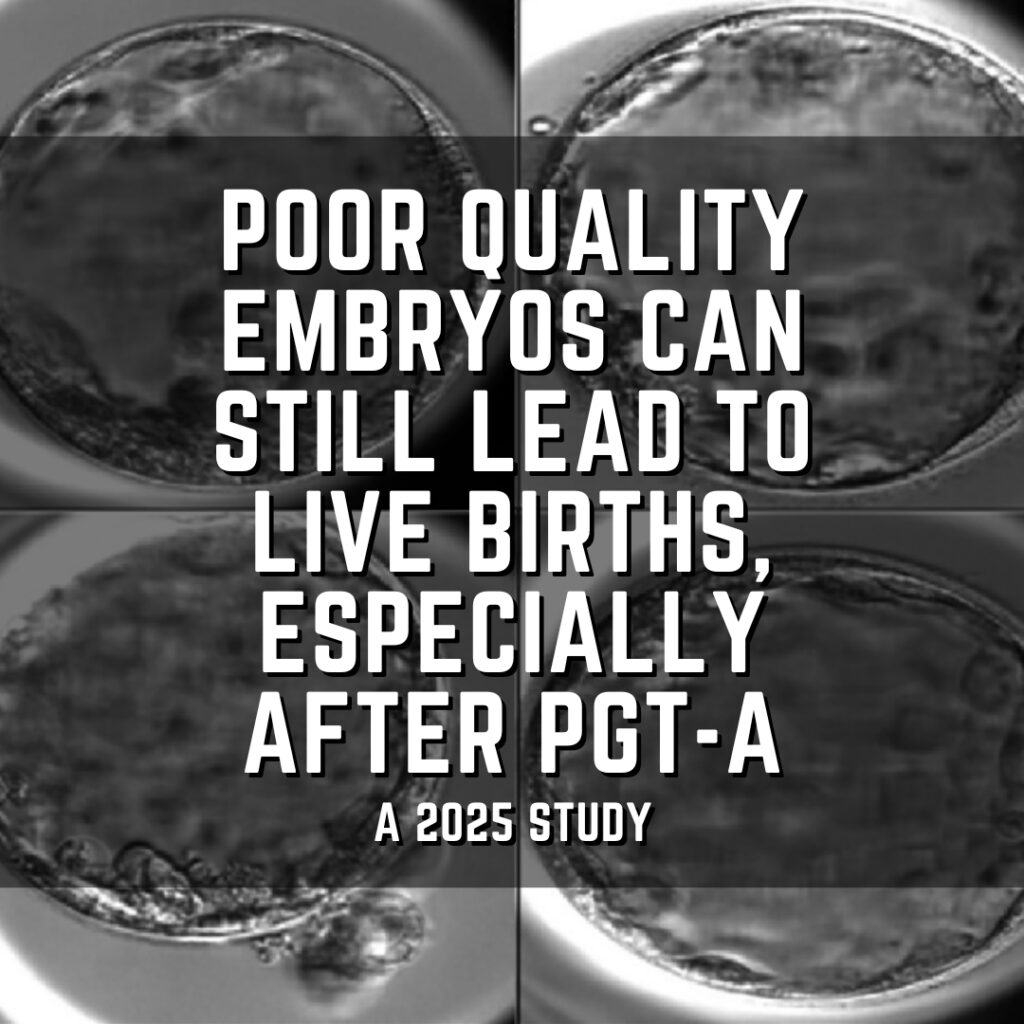
A 2025 study found that while poor quality blastocysts are less likely to be euploid, some can still lead to healthy live births. Tested poor quality embryos had higher live birth rates and lower miscarriage rates than untested ones, especially when they developed by day 5 instead of day 6. Read more.

In a 2025 study, the sperm selection device Zymot modestly improved blastocyst development compared with conventional sperm processing method (density gradient centrifugation) in donor egg cycles using frozen sperm, though fertilization rates were similar. Read more.

A 2025 study introduces the FORTUNE model, developed from over 10,000 PGT-A cycles, that uses age, ovarian reserve, partner age, and BMI to predict how many euploid embryos a patient is likely to produce by grouping patients into five prognosis categories. Read more.

A 2025 case report describes a live birth from a frozen immature egg matured through rescue IVM, suggesting that immature eggs in freezing cycles may have reproductive potential and should not be routinely discarded. Read more.
Top viewed posts on social
Here you can see the top 3 most popular posts for the month on Instagram, excluding the posts from above.
- Study finds CoQ10 improves sperm count, motility, and pregnancy rates. Across nine randomized trials including 781 men, CoQ10 significantly improved semen quality, including sperm count, motility, and seminal CoQ10 levels. Men who took CoQ10 also had higher odds of clinical pregnancy compared to those taking placebo or other therapies. The benefits were most noticeable when treatment lasted more than three months, and the studies reported minimal or mild side effects. Read more on PubMed.
- ASRM President warns RRM movement aims to get rid of IVF. Elizabeth Ginsburg, president of the American Society for Reproductive Medicine (ASRM), explains that some conservative and religious groups in the US are promoting Restorative Reproductive Medicine (RRM) as an alternative to IVF, claiming it treats the “root cause” of infertility. She notes that this is exactly what fertility doctors already do through testing and evidence based care, and cautions that RRM is being presented as supportive fertility care while actually sowing doubt about IVF and threatening access to treatment. Ginsburg emphasizes that RRM is not an alternative to IVF and says the “[RRM] movement’s ultimate goal is political: to get rid of IVF.” She stresses that IVF has helped millions of families worldwide, is supported by decades of research, and remains the only proven solution for many causes of infertility. Read more on Politico.
- Marijuana linked to higher chance of abnormal embryos. A new study found that exposure to THC, the active ingredient in marijuana, was linked to a 9% increased chance of aneuploidy in embryos during IVF. “It’s important that patients try to abstain from cannabis use when trying to conceive, but for those that cannot, this still offers an opportunity for harm reduction by reducing the amount they’re using to mitigate adverse outcomes,” said OBGYN Jamie Lo who was not involved in the study. Read more on STAT.
And here’s the top 3 older Remembryo posts (based on Instagram story views). Click any image to read more.
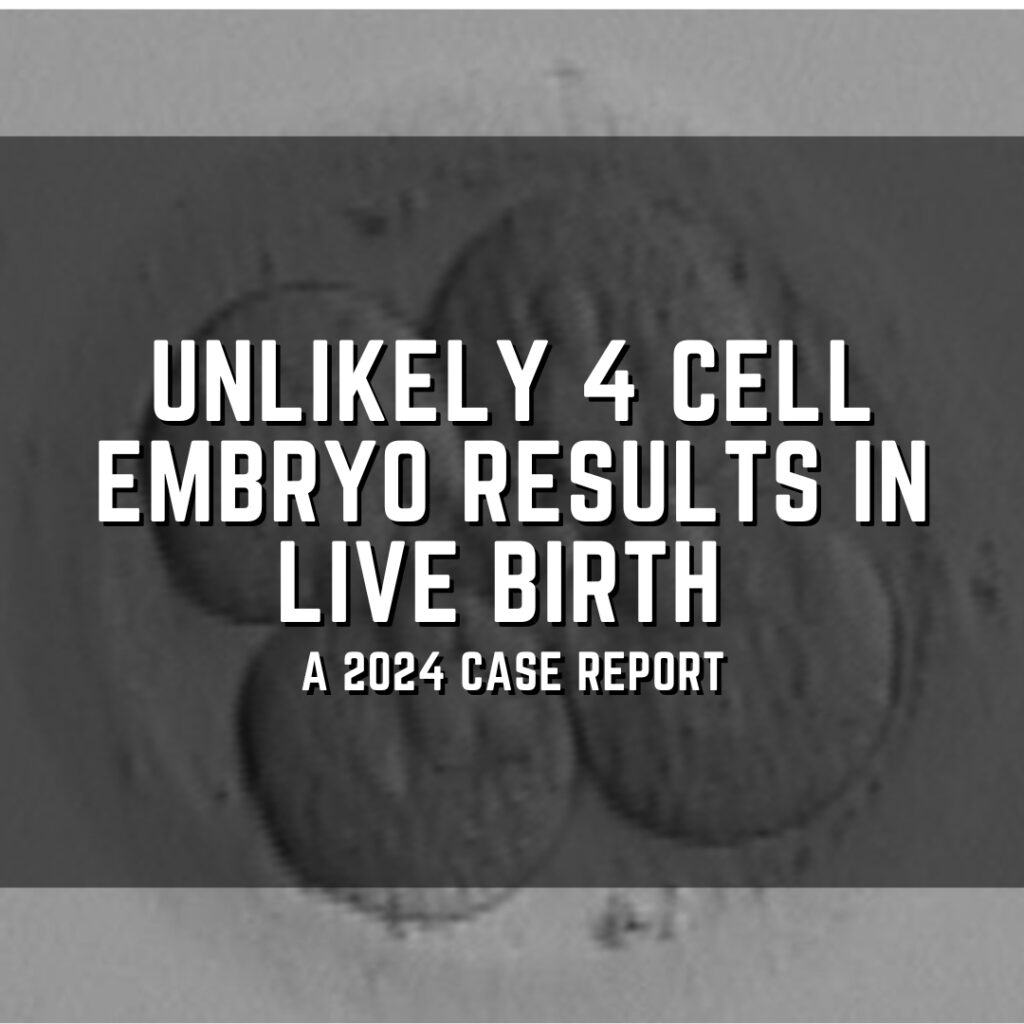
A 2024 case report details a patient who had success transferring a 4 cell embryo on day 4 -- an embryo that some clinics wouldn't have considered for transfer. Read more.

What’s the ideal follicle size for IVF? Researchers in a 2022 study compared follicle size at the time of trigger and related it to rates for egg maturity, fertilization, good quality embryos and euploidy. They also examined the association between follicle size and age and BMI. Read more.

Researchers in a 2022 study found that women with low β-hCG (<149 mUI/ml) are more likely to have a preterm delivery and abnormal placental pathologies compared to women with higher β-hCG. Read more.
IVF in the news highlights
Each week in the Remembryo newsletter, I share short summaries of IVF-related stories that made headlines. Below are 5 leading headlines for the month, with the first two summarized:
- Experts push back on Trump warnings about Tylenol in pregnancy and autism. On Monday, President Trump urged women to avoid Tylenol in pregnancy, citing a review linking it to autism. But Diddier Prada, the study’s lead author, stressed it does not prove causation, and large studies in Sweden and Japan found no link once genetics were considered. The FDA, CDC, WHO, and major medical groups all agree there is no proof that acetaminophen (also called paracetamol) causes autism and say it remains the safest option for pain or fever in pregnancy, while untreated fever itself can raise risks for birth defects, preterm birth, and miscarriage. Experts warn that discouraging Tylenol could remove an important treatment and fuel misinformation.
- NICE warns clinics in England to stop using unproven IVF add ons. The National Institute for Health and Care Excellence (NICE), which sets medical guidelines in England, Wales and Northern Ireland, is advising fertility clinics to stop offering unproven IVF add-ons such as endometrial scratch and endometrial receptivity testing. “Our recommendations are designed to protect patients and ensure they only receive care that we know works,” said chair of NICE’s fertility guideline committee Fergus Macbeth. Read more on BBC.
- $50M investment backs US launch of automated IVF labs. Read more on Femtech Insider or see it in action on their website.
- Childhood plastic exposure linked to long term health risks. Read more on Science Daily.
- Experts warn social media profits from fear in pregnancy. Read more on The Guardian.
💡 Enjoying this summary?
Join 10,000+ readers who stay updated on IVF research each week:
Sign up here →
IVF questions from the community
Here are select questions that I answered either in my Facebook group or on Reddit.
- Can retained products of conception (RPOC) cause infertility years after a miscarriage or D&C? Yes. A 2024 case report described a woman who struggled with infertility for ten years until doctors discovered she still had retained placental tissue from a dilation and curettage (D&C) performed a decade earlier. After hysteroscopic removal of the tissue, she conceived within four months. The authors highlighted that RPOC can block the uterine cavity and disrupt the endometrium, making implantation difficult. They also emphasized the importance of careful imaging and safer removal techniques to reduce complications. Read more in my post Patient overcomes decade-long infertility after removal of retained tissue.
- Do EMMA and ALICE tests help IVF patients with repeated implantation failure or miscarriage? A 2025 study found that patients with abnormal EMMA or ALICE results who took antibiotics and/or probiotics had pregnancy rates similar to those with normal results, suggesting the treatment may help. But the study didn’t include a true control group, and overall there isn’t much research yet, so it’s still unclear how effective these tests really are. Read more in my post Study investigates the use of EMMA & ALICE in IVF patients with RIF, RPL.
- What works for women with diminished ovarian reserve (DOR)? A 2024 meta-analysis of 38 randomized trials found that DHEA, testosterone gel, high-dose gonadotropins, and delayed-start protocols all increased the number of eggs retrieved in IVF. Testosterone pretreatment also improved pregnancy and live birth rates. Other options like letrozole, clomid, growth hormone, and dual stimulation showed mixed or limited results, and many had too few studies to draw strong conclusions. Read more in my post Meta-analysis combines 38 studies on treatments for diminished ovarian reserve.
IVF research brief
🔒 The full research brief for the month begins below (paid subscribers only)
Each week I flag ~20 IVF studies I find most helpful. Some are covered in detail on Remembryo, but paying subscribers get short summaries and links to all of them, organized into categories like implantation, egg quality, PGT-A, etc.
Below is the full list of 71 short summaries and links for studies that weren’t featured on Remembryo (available to paying members only).
🔍 Sneak peek: 3 select summaries from the month
- This large retrospective single-center study analyzing more than 200,000 oocytes found that endometriosis and adenomyosis did not significantly affect oocyte morphology, though adenomyosis was linked to higher miscarriage risk and lower live birth rates. Read more (abstract only)
- This systematic review of 14 studies found mixed and often conflicting evidence on whether intraovarian PRP improves IVF outcomes in women with poor ovarian response, leaving its effectiveness uncertain. Read more (full article)
- This retrospective cohort study of 271 infertility patients found that chronic endometritis was rare, showed no difference between those with and without prior implantation failure, and was not associated with BCL6 overexpression or abnormal ERA results, suggesting limited value of routine CE testing after failed transfers. Read more (abstract only)
If you like these, consider subscribing below to get the full list.


About Embryoman
Embryoman (Sean Lauber) is a former embryologist and the founder of Remembryo, an IVF research and fertility education website. After working in an IVF lab in the US, he returned to Canada and now focuses on making fertility research more accessible. He holds a Master’s in Immunology and launched Remembryo in 2018 to help patients and professionals make sense of IVF research. Sean shares weekly study updates on Facebook, Instagram, and Reddit regularly. He also answers questions on Reddit or in his private Facebook group.