Here’s your IVF research roundup for December 2025. Each month, I highlight everything I’ve shared on Remembryo — including new IVF study summaries, popular social posts, answers to community questions, and a full list of research highlights with links and short summaries from my newsletter. The paywall is off for this post.
📬 Like this roundup?
Get IVF research summaries, news highlights, and weekly subscriber-only content straight to your inbox.
Subscribe to the Remembryo Newsletter →
🔗 Original studies are referenced in this post or within the linked Remembryo posts.
💡 Reminder: Terms underlined with a dotted black line are linked to glossary entries. Clicking these does not count toward your paywall limit.
Remembryo posts
Here’s what I covered this month on Remembryo. Click any image to read more.
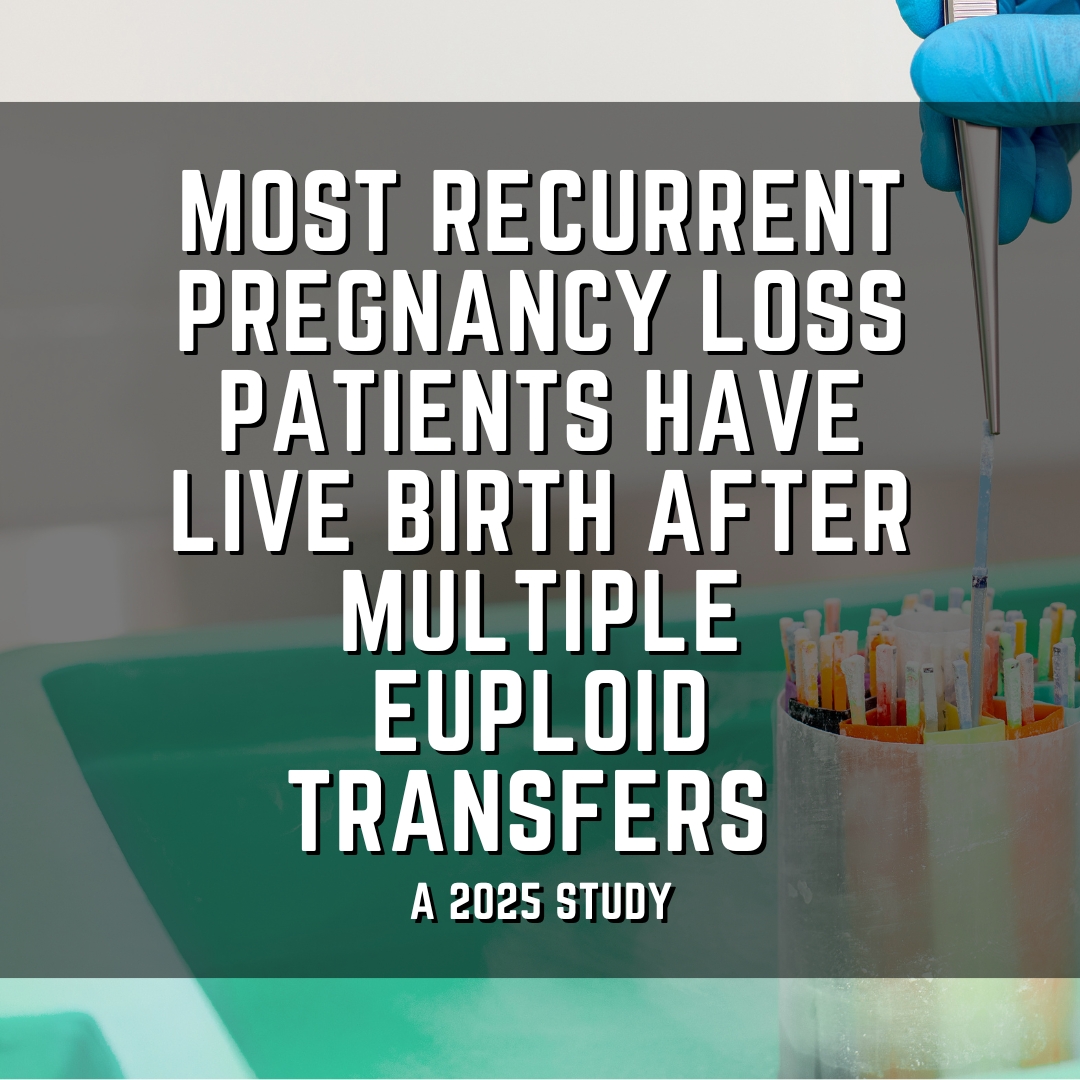
A 2025 study suggests that most patients with recurrent pregnancy loss who transfer up to 3 euploid embryos go on to have a live birth, though data from later transfers are limited. Read more.
In a 2025 meta-analysis, day 5 blastocysts were linked to higher pregnancy and live birth rates than day 6 blastocysts, while newborn outcomes were similar and poor quality day 5 embryos showed comparable potential to good quality day 6 embryos. Read more.
These are the top 5 posts that got the most engagement on social media or the most page views here on Remembryo in 2025. No paywall on this post. Read more.
A 2025 study introduces the term “oocyte and early embryo competence defects” to describe younger IVF patients who repeatedly have no transferable embryos due to low quality eggs, finding that about 13–23% had genetic changes. Read more.
A 2025 review found that men with infertility are more likely to have certain health conditions, but the reasons aren’t clear and the overall risks are still low, suggesting that fertility testing can be a good chance to check on general health. Read more.

This post provides a short summary of select news releases/studies from the American Society for Reproductive Medicine (ASRM) 2025 meeting in Texas. These studies may not have been published or peer reviewed yet. Read more.
Top viewed posts on social
Here you can see the top 3 most popular posts for the month on Instagram, excluding the posts from above.
- Adding prolactin and EmbryoGlue to embryo transfer improves live birth rate. A randomized controlled trial found that adding prolactin to EmbryoGlue increased live birth rates and reduced early pregnancy loss after single frozen blastocyst transfer, but because all embryos had their zona removed (an uncommon practice), it’s unclear whether these benefits apply to standard transfers where the zona is left intact. Read more (abstract only)
- How common are endometriosis and adenomyosis worldwide? A large systematic review and meta-analysis of nearly 200 million women found that endometriosis affects about 5% of the general population and 38% of people with infertility, adenomyosis affects about 1% and 31% respectively, and the two conditions often coexist, with adenomyosis present in roughly 42% of those with endometriosis. Read more (full article)
- Lifestyle changes before fertility treatment help some women conceive. A randomized controlled trial found that a 6-month structured lifestyle program before fertility treatment did not significantly increase live birth rates in women with infertility and obesity or PCOS, although it did increase the likelihood of conceiving without assisted reproduction. Read more (full article)
And here’s the top 3 older Remembryo posts (based on Instagram story views). Click any image to read more.
Researchers in a 2022 study reported on the outcomes of 144 "abnormal" embryos, consisting of aneuploids and mosaics, finding a single live birth with an aneuploid and more favorable results with mosaics. Read more.

Researchers in a 2023 study found that patients with or without endometriosis have comparable live birth rates after transferring a euploid embryo, although patients may have been surgically treated (a limitation). Endometriosis patients are more likely to produce aneuploid embryos. Read more.

A 2024 study combined studies involving unexplained infertility patients and endometriosis, finding that nearly half of them have the condition. Read more.
IVF in the news highlights
Each week in the Remembryo newsletter, I share short summaries of IVF-related stories that made headlines. Below are 5 leading headlines for the month, with the first two summarized:
- Nearly 200 children conceived from donor with cancer risk gene. An investigation found that sperm from a single donor carrying a rare cancer causing gene mutation was used to conceive nearly 200 children across Europe. Experts say the donor passed all standard screening because the mutation was not present in most of his body and arose in only a portion of his sperm, and that such events are very rare. Read more on the BBC.
- Fertility depends on more than egg quality. New research suggests that fertility and aging are influenced not only by egg quality but also by the overall health of the ovary, including the tissues, nerves, and support cells around the egg. Scientists are now exploring treatments that target ovarian health, such as anti-fibrotic and longevity drugs, which could one day help with infertility or delay menopause. Read more on New York Times.
- Pregnancy can reveal hidden heart problems. Check out the full story on Today.
- Experts warn that many IVF add-ons are unproven. Read more on Medscape.
- Influencers promote unassisted birth despite risks. Read more on MedPage Today.
💡 Enjoying this summary?
Join 10,000+ readers who stay updated on IVF research each week:
Sign up here →
IVF questions from the community
Here are select questions that I answered either in my Facebook group or on Reddit.
- How can patients tell if an IVF lab is good? This is hard to assess because clinics generally don’t report the detailed lab data needed to judge lab quality. Being close to national average success rates can be a reassuring sign, but statistics can be inflated by clinic policies, such as transferring only euploid embryos or discarding poorer-quality embryos. You can look at different lab key performance indicators here. That said, a recent 2022 study revealed that high-performing IVF clinics in the US commonly practice freezing blastocysts, control air quality, use intramuscular progesterone for FETs, culture embryos under low oxygen, and more.
- Besides the increased risk of twins, does transferring a second embryo negatively affect the first embryo? This study suggests that when two good quality day 5 blastocysts are transferred and only one continues as a singleton pregnancy, the risk of miscarriage is higher than if only one embryo had been transferred. The concern is that if the second embryo implants briefly and then fails, it might trigger an inflammatory response in the uterus that can harm the surviving embryo.
- I’ve heard that artificial oocyte activation (AOA) can help prevent embryo arrest. Is this true? This meta-analysis found that AOA improved fertilization and live birth rates only in patients with a history of fertilization failure, but it did not improve blastocyst formation, pregnancy, or live birth rates in patients whose main issue was embryo arrest
IVF research brief
🔒 The full research brief for the month begins below (paid subscribers only)
Each week I flag ~20 IVF studies I find most helpful. Some are covered in detail on Remembryo, but paying subscribers get short summaries and links to all of them, organized into categories like implantation, egg quality, PGT-A, etc.
Below is the full list of about 60 short summaries and links for studies that weren’t featured on Remembryo (available to paying members only).
🔍 Sneak peek: 3 select summaries from the month
- In this retrospective registry study of 1,678,872 single embryo transfers in Japan, assisted hatching was associated with slightly lower clinical pregnancy and live birth rates overall and small increases in miscarriage, multiple pregnancy, and placenta accreta risk, with potential benefit limited to frozen blastocyst transfers in women under 35 years. Read more (full article)
- In this systematic review, immunological treatments such as G-CSF, intralipid and lymphocyte immunization showed inconsistent effects on IVF outcomes in women with unexplained recurrent pregnancy loss. Read more (full article)
- In a systematic review of 16 economic evaluations, single embryo transfer and SET based strategies were generally more cost effective than double embryo transfer, especially in younger patients, due to fewer pregnancy complications and lower long term healthcare costs. Read more (full article)
If you like these, consider subscribing below to get the full list.


About Embryoman
Embryoman (Sean Lauber) is a former embryologist and the founder of Remembryo, an IVF research and fertility education website. After working in an IVF lab in the US, he returned to Canada and now focuses on making fertility research more accessible. He holds a Master’s in Immunology and launched Remembryo in 2018 to help patients and professionals make sense of IVF research. Sean shares weekly study updates on Facebook, Instagram, and Reddit regularly. He also answers questions on Reddit or in his private Facebook group.