
Here’s your IVF research roundup for March 2026. Each month, I highlight everything I’ve shared on Remembryo — including new IVF study summaries, popular social posts, answers to community questions, and a full list of research highlights with links and short summaries from my newsletter. The paywall is off for this post.
📬 Like this roundup?
Get IVF research summaries, news highlights, and weekly subscriber-only content straight to your inbox.
Subscribe to the Remembryo Newsletter →
🔗 Original studies are referenced in this post or within the linked Remembryo posts.
💡 Reminder: Terms underlined with a dotted black line are linked to glossary entries. Clicking these does not count toward your paywall limit.
Remembryo posts
Here’s what I covered this month on Remembryo. Click any image to read more.
A 2026 study showed that women with unexplained infertility who didn’t get pregnant after IVF had a more diverse endometrial microbiome with fewer Lactobacillus bacteria, and metabolites produced by other bacteria may influence how the uterine lining functions during implantation. Read more.
A 2026 study found that patients with a previous cesarean delivery had slightly lower live birth rates after IVF compared to those with a previous vaginal delivery, though the reason for this difference isn't clear. Read more.
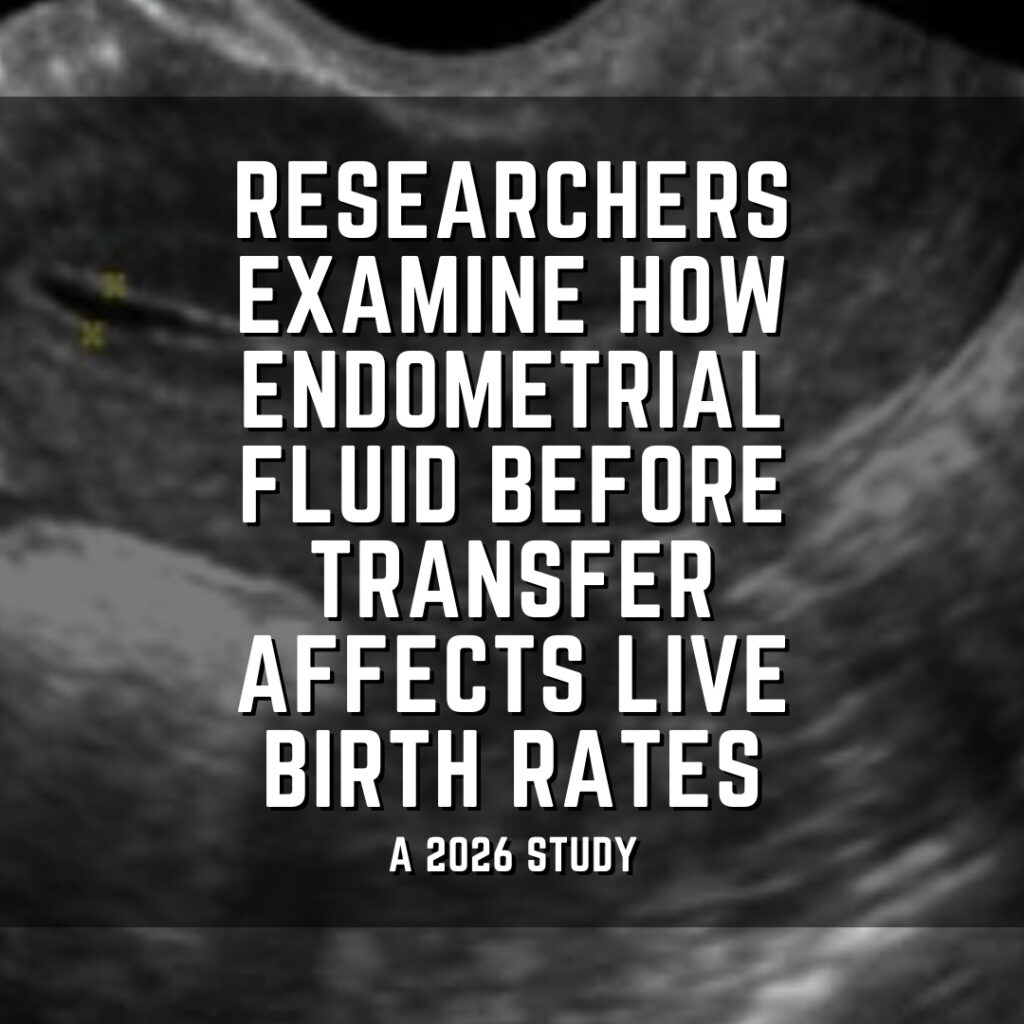
A 2026 study found that if endometrial fluid cleared before embryo transfer, live birth rates were similar to patients without fluid. When the fluid remained, live birth rates were lower, and cancelling the cycle didn't appear to improve outcomes in a later transfer. Read more.
A 2026 study of over 227,000 IVF couples found that chromosomal abnormalities were uncommon but more frequent than in the general population, and were most strongly linked to recurrent miscarriage, poor sperm quality, and younger age. Read more.
Researchers in a 2026 randomized trial found that ~9 weeks of transdermal testosterone before IVF didn't improve pregnancy rates or egg numbers in women with diminished ovarian reserve. Read more.
PGT-A contamination, sometimes reported as “no result,” is poorly studied, but a 2026 study found it’s rare and that undetected contamination can distort PGT results, highlighting the importance of contamination detection in testing. Read more.
Top viewed posts on social
Here you can see the top 3 most popular posts for the month on Instagram, excluding the posts from above.
- Dual trigger may not improve egg numbers in IVF patients aged 35-42. A randomized trial in IVF patients aged 35–42 found that dual trigger did not improve the number of mature eggs, fertilization, or pregnancy outcomes compared to hCG alone. While dual trigger was linked to higher fertilization rates in very small follicles, the number of eggs from these follicles was low, so this finding should be interpreted cautiously. Read more on Instagram or the original publication in The Journal of Ovarian Research.
- Progesterone support and transfer timing may not affect modified natural FET outcomes. A randomized trial found that adding progesterone luteal support in modified natural FET cycles did not improve live birth rates compared to no progesterone. Outcomes were also similar for transfers performed 6 vs 7 days after trigger, suggesting timing may be more flexible in good-prognosis patients transferring a single good-quality blastocyst. Read more on Instagram or the original publication in Human Reproduction Open.
- Does keeping embryos frozen longer affect live birth rates? A Danish nationwide study of over 12,000 frozen embryo transfers found that longer storage time, including ≥25 months, did not reduce clinical pregnancy or live birth rates. Birth outcomes such as preterm delivery, size at birth, and congenital malformations were also similar regardless of how long embryos were frozen. Read more on Instagram or the original publication in The Journal of Clinical Medicine.
And here’s the top 3 older Remembryo posts (based on Instagram story views). Click any image to read more.
Researchers in a 2025 study showed that women with endometriosis or adenomyosis had lower IVF success overall after 3 IVF cycles, with more differences in the first, fresh transfer. Read more.
A 2025 study of women with repeated IVF failure and unexplained infertility found that about 13% had mutations affecting egg or embryo development, mostly in the TUBB8 and PATL2 genes, suggesting that many “unexplained” cases may have underlying genetic causes. Read more.
A large 2025 study of donor egg cycles found that poor fertilization in IVF is uncommon, but when it does occur it’s usually caused by sperm rather than the egg. Most cases of low fertilization were sperm-related, while only a minority were linked to eggs or other factors. Read more.
IVF in the news highlights
Each week in the Remembryo newsletter, I share IVF-related stories that made headlines in the news. Below are 3 leading headlines for the month:
- New Costco program aims to make fertility treatment more affordable (Glamour)
- Endometriosis care may no longer need laparoscopy first (STAT)
- When “helpful” comments miss the mark during IVF (The Guardian)
💡 Enjoying this summary?
Join 10,000+ readers who stay updated on IVF research each week:
Sign up here →
IVF questions from the community
Here are select questions that I answered either in my Facebook group or on Reddit.
- How common are day 5 vs day 6 vs day 7 blastocysts? Most embryos reach the blastocyst stage on day 5 or 6, but some develop more slowly and need extra time. Using time-lapse, this study found that 0.7% of embryos became a blast on day 4, 64% on day 5, 33.8% on day 6, and 1.6% on day 7. Read more in my post Study evaluates the potential of day 4, 5, 6 and 7 blastocysts.
- Is there any way to increase the chances of having a boy or a girl in IVF? The sex of an embryo is determined by the sperm (X or Y chromosome), so the most reliable way to select sex is through PGT-A after IVF. There are also sperm selection methods, like MicroSort (not available in the US), and a 2023 study showed that a modified lab technique could enrich sperm to about 80% X or Y, leading to a higher proportion of embryos of the desired sex after testing. Read more in my post Sperm selection technique offers inexpensive way for enriching desired sex of embryo.
- Does growth hormone improve IVF success in all patients? A large randomized trial in normal responders found no improvement in egg numbers, embryo development, or pregnancy outcomes with growth hormone compared to no treatment. This study was limited to normal responders and may not detect smaller effects, but other data suggests growth hormone may benefit poor responders. Read more in my post Large trial examines impact of growth hormone on IVF success.
IVF research brief
🔒 The full research brief for the month begins below (paid subscribers only)
Each week I flag ~10-20 IVF studies I find most helpful. Some are covered in detail on Remembryo, but paying subscribers get short summaries and links to all of them, organized into categories like implantation, egg quality, PGT-A, etc.
Below is the full list of about 50 short summaries and links for studies that weren’t featured on Remembryo this month (available to paying members only).
🔍 Sneak peek: 3 select summaries from the month
- This review examines surgery for endometriosis related infertility and concludes that while surgery may improve natural conception in some cases, overall reproductive benefits appear modest and outcomes remain variable. Read more (abstract only)
- This mini review discusses limitations of PGT-A testing and highlights how differences in laboratory methods and reporting can lead to inconsistent embryo classifications, especially for mosaic and segmental abnormalities. Read more (full article)
- In this randomized controlled trial, Zymot reduced DNA fragmentation more than density gradient centrifugation but did not improve fertilization, pregnancy, or live birth rates. Read more (full article)
If you like these, consider subscribing below to get the full list.


About Embryoman
Embryoman (Sean Lauber) is a former embryologist and the founder of Remembryo, an IVF research and fertility education website. After working in an IVF lab in the US, he returned to Canada and now focuses on making fertility research more accessible. He holds a Master’s in Immunology and launched Remembryo in 2018 to help patients and professionals make sense of IVF research. Sean shares weekly study updates on Facebook, Instagram, and Reddit regularly. He also answers questions on Reddit or in his private Facebook group.