
Here’s your IVF research roundup for June 2026. Each month, I highlight everything I’ve shared on Remembryo — including new IVF study summaries, popular social posts, answers to community questions, and a full list of research highlights with links and short summaries from my newsletter. The paywall is off for this post.
📬 Like this roundup?
Get IVF research summaries, news highlights, and weekly subscriber-only content straight to your inbox.
Subscribe to the Remembryo Newsletter →
🔗 Original studies are referenced in this post or within the linked Remembryo posts.
💡 Reminder: Terms underlined with a dotted black line are linked to glossary entries. Clicking these does not count toward your paywall limit.
Remembryo posts
Here’s what I covered this month on Remembryo. Click any image to read more.
Researchers in a 2026 study found that higher beta-hCG levels measured 9 days after a single euploid embryo transfer were linked to a higher chance of live birth and a lower chance of biochemical pregnancy loss or ectopic pregnancy. Read more.
Researchers in a 2026 randomized controlled trial found that natural FETs using euploid embryos were associated with lower early pregnancy loss rates and higher live birth rates than medicated transfers, although the study was stopped early. Read more.
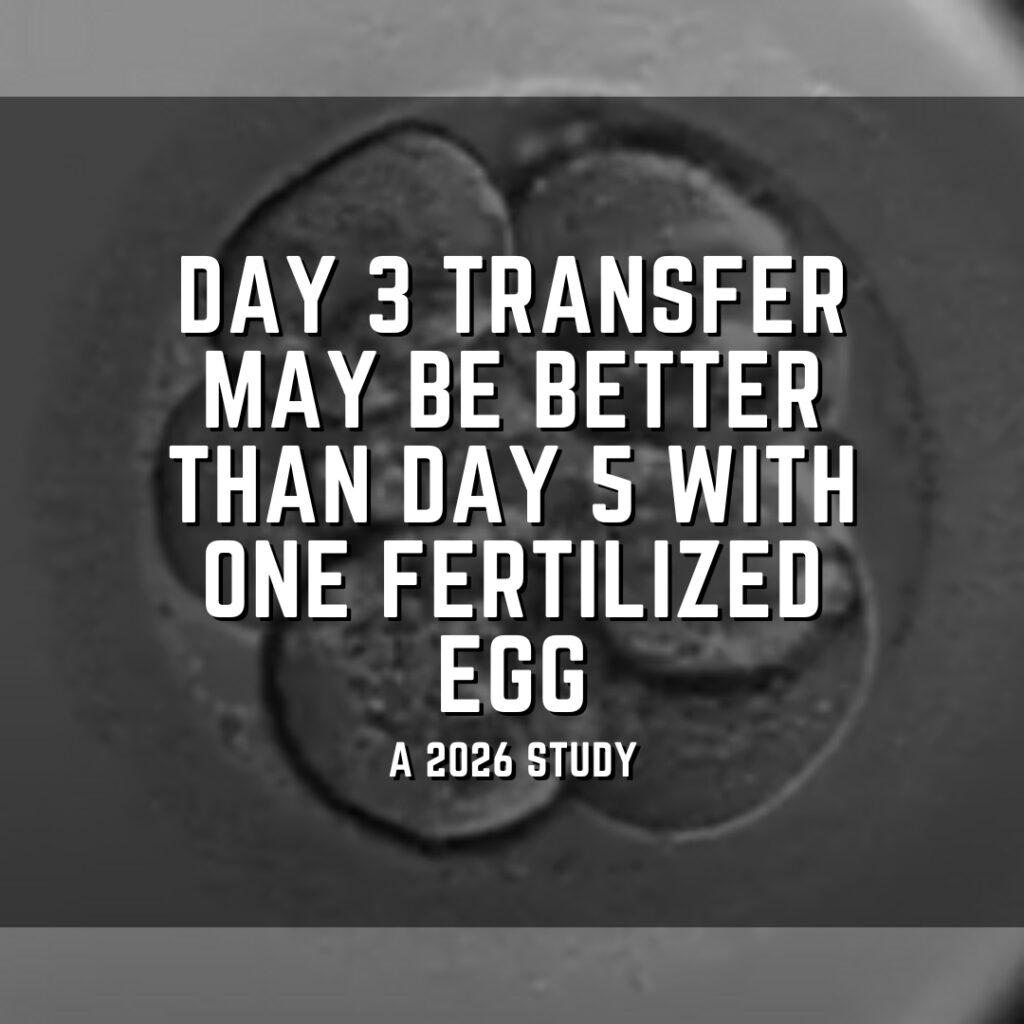
Researchers in a 2026 study found that patients with only one fertilized egg (zygote) may have a higher chance of live birth with cleavage stage transfer than blastocyst stage transfer, especially at older ages. Read more.
Researchers in a 2026 study proposed statistical thresholds that may help distinguish between poor IVF results that can happen by chance and those that may need a closer look. Read more.
Researchers in a 2026 study found that a single ultrasound performed at 45 days of IVF gestation may be sufficient to diagnose many miscarriages without the need for a repeat scan. Read more.

Researchers in a 2026 study found that about 0.4% of blastocysts derived from apparently normal 2PN fertilization were triploid, and although these embryos were more likely to have abnormal polar body extrusion, genetic testing is still the only reliable way to identify them. Read more.
Top viewed posts on social
Here you can see the top 3 most popular posts for the month on Instagram, excluding the posts from above.
- Healthy baby born from a ‘abnormally fertilized’ 5PN embryo. Researchers in a 2026 case report described the birth of a healthy baby after transferring the only euploid embryo, which unexpectedly developed from a normally discarded 5-pronuclei (5PN) zygote. Read more in the original publication.
- Experts highlight the mental health gap in fertility care. Researchers in a commentary argued that mental health support, including cognitive behavioral therapy, mind-body programs, and virtual care, should be integrated into fertility treatment to reduce distress and potentially improve treatment continuation and outcomes. Read more in the original publication.
- Natural FET linked to fewer pregnancy complications. Researchers in a 2026 retrospective study found that natural cycle frozen embryo transfers were associated with lower miscarriage and pregnancy complication rates, and a slightly higher live birth rate, than medicated frozen embryo transfers.. Read more in the original publication.
And here’s the top 3 older Remembryo posts (based on Instagram story views). Click any image to read more.
Researchers in a 2025 study performed PGT-A on whole embryos, including arrested embryos and different developmental stages, finding high rates of euploidy. Read more.
In a 2025 study, researchers estimated how many frozen eggs are needed, by age, to reliably yield three euploid blastocysts or achieve one, two or three live births, offering practical guidance for egg freezing patients. Read more.
A 2025 case report describes a live birth in a 46-year-old woman using her own eggs through IVF, adding to a small number of published cases showing that pregnancy at this age, while uncommon, is still possible without add-ons or PGT-A. Read more.
IVF in the news highlights
Each week in the Remembryo newsletter, I share IVF-related stories that made headlines in the news. Below are 3 leading headlines for the month:
- Blood test could expand prenatal genetic screening. Read more on The Guardian.
- Study finds no clear link between IVF and autism. Read more on Neuroscience News.
- Human embryo gene editing takes new step forward. Read more on The New York Times.
💡 Enjoying this summary?
Join 15,000+ readers who stay updated on IVF research each week:
Sign up here →
IVF questions from the community
Here are select questions that I answered either in my Facebook group or on Reddit.
- Does treating chronic endometritis improve IVF outcomes? Chronic endometritis is often treated with a 2-week course of antibiotics (commonly doxycycline), although some people need additional treatment if repeat testing remains positive. Evidence that treatment improves pregnancy rates is mixed overall, but some studies have found higher pregnancy and live birth rates after successful treatment. Read more: Patients with antibiotic-cured endometritis still show increased pregnancy loss.
- Can a poor-quality day 3 embryo become a good blastocyst? Yes. Lower-quality day 3 embryos are less likely to reach the blastocyst stage, but some do develop into excellent blastocysts. Once an embryo reaches the blastocyst stage, one study found that its day 3 grade didn’t appear to affect its chance of a live birth. Read more: Day 3 quality of a blastocyst is not linked to its chance of live birth.
- Can IVF lab issues affect embryo development or pregnancy outcomes? Lab issues can absolutely affect IVF outcomes. Examples might include culture conditions, incubator performance, air quality, temperature or pH fluctuations, embryo handling, freezing/thawing procedures, or embryo transfer technique. That said, embryo-related factors (especially chromosomal abnormalities) are still thought to account for many failed implantations and miscarriages. Read more: Why do embryos in IVF fail to implant or miscarry?
IVF research brief
🔒 The full research brief for the month begins below (paid subscribers only)
Each week I flag ~10-20 IVF studies I find most helpful. Some are covered in detail on Remembryo, but paying subscribers get short summaries and links to all of them, organized into categories like implantation, egg quality, PGT-A, etc.
Below is the full list of about 35 short summaries and links for studies that weren’t featured on Remembryo this month (available to paying members only).
🔍 Sneak peek: 3 select summaries from the month
- In a meta-analysis of randomized trials, natural FETs were associated with slightly higher live birth and lower miscarriage rates compared with medicated FETs. Read more (abstract only)
- A meta-analysis found optimal stimulation protocols for DOR vary by patient group, with double stimulation or GnRH agonist approaches showing better outcomes in certain subgroups. Read more (full article)
- A meta-analysis of randomized trials found intraovarian PRP improves ovarian reserve markers but not pregnancy rates in women with poor ovarian reserve or ovarian insufficiency. Read more (full article)
If you like these, consider subscribing below to get the full list.


About Embryoman
Embryoman (Sean Lauber) is a former embryologist and the founder of Remembryo, an IVF research and fertility education website. After working in an IVF lab in the US, he returned to Canada and now focuses on making fertility research more accessible. He holds a Master’s in Immunology and launched Remembryo in 2018 to help patients and professionals make sense of IVF research. Sean shares weekly study updates on Facebook, Instagram, and Reddit regularly. He also answers questions on Reddit or in his private Facebook group.